ERGUN İŞERİ
AUTHOR • TÜRKİYE
Throughout recorded human history, various forms of mourning have been described following changes that significantly impacted life and resulted in loss of life.
In almost every continent, mourning manifests itself through various rituals. Religions and beliefs that emerged over time have gradually transformed into new forms that encompass these rituals, or old rituals have become part of new beliefs.
Nowadays, the mourning processes that follow loss have become a field of expertise in various subfields of psychology and sociology.
The concept of mourning is defined by various authors in its most general sense as follows; “a state of intense and prolonged grief following a loss” (Özkan & Özel, 2020)
This definition can be used both individually and socially. Actually, grief that we consider individual often involves a group ranging from a few people to dozens of people.
In terms of social traumas and the mourning experienced as a result of these traumas, Türkiye has a long history and extensive experience. The destruction and breakdown caused by the wars fought with various countries, especially during the last century of the Ottoman Empire, resulted in large scale migrations and loss of life. During the same period, with the influence of rising nationalist movements, an envi
ronment of civil war emerged in almost every area from the Balkans to Arabia. Numerous crimes against humanity were committed by governments and social groups, including the killing of many people, forced migration, forced conversion to another religion, confiscation of property, and rape.
Many incidents or conflicts affecting the whole or part of society, including those arising from religious beliefs, ethnic origins, and differences of opinion, as well as workplace murders and femicides, have become social traumas.
New social traumas are added almost every day to those that reach from the past to the present
What is the right to mourn?
“When there is a loss, we must mourn. When we migrate, we lose time, we lose our family, we lose trees, we lose cats. When a mother elephant dies, the father elephant and the baby elephants cannot immediately separate from the dead elephant. They’re waiting, kicking, as if the dead elephant will come back to life. They leave after 3-4 hours. There is a state of mourning for loss even in animals.” (Volkan, 2016)
In terms of the world’s major religions, mourning occupies an important place in almost all of them. In some, it is limited to a few days, while in others it is a process that spans years.
Considering all this, it is a widely accepted view that mourning is part of human history or humanity, and has become an indispensable and legitimate right for every human being.
Even when viewed solely from the perspective of faith, we can say that mourning is a fundamental human right within the scope of xthe “Universal Declaration of Human Rights”. (İnsan Hakları Evrensel Beyannamesi)
In conclusion, mourning can be defined as a fundamental human right.
What is the right to mourn?
Nowadays, mourning is generally practiced in the form of religious rituals. Since the majority of Türkiye’s population is considered to be Muslim, it is necessary to look at the issue primarily from an Islamic perspective.
From an Islamic point of view, the approach to mourning has been interpreted as follows, according to the doctrine formalized by the High Council of Religious Affairs in Türkiye:
“It is normal for a person to feel sad, mourn, and become sorrowful due to death. In fact, there is no harm in expressing one’s grief, crying silently, and shedding tears.”
This assessment is explained with examples from the life and words (Hadith) of the Prophet Muhammad. The Council further states in its interpretation that Muhammad shed tears over the deaths of his own children and grandchildren, but also said that it was not appropriate to resist Allah’s will or to wail and tear one’s clothes, as was customary in the pre-Islamic Arab society known as the “jahiliyyah” period. (Din İşleri Yüksek Kurulu)
Despite this religious definition, mourning rituals in contemporary Arab society bear similarities to the customs of the “jahiliyyah” era in terms of the reactions they show in response to loss. While people’s reactions to loss are entirely unique to them, they also stand out as learned, acquired patterns of social behavior. Forms of mourning and behaviors can remain strong enough to persist despite the rules that are intended to be imposed.
The reactions that arise in social traumas, or the forms of social mourning, also vary from society to society.
Different communities living within the same country may have different approaches to mourning or, more broadly, to social mourning. These differences can also lead to reactions of acceptance and rejection among communities.
Especially in societies that have experienced “civil war”, an event that is traumatic for one community may have a different meaning for another. In some societies following civil wars, “forgetting” is predominant among those who caused the trauma (the perpetrators). However, without “justice” being served for both the perpetrators and the victims, the forgetting that occurs or is intended to occur will “resurface later and will often be filled with resentment.” (Traverso, 2021)
From the perspective of those who form the community, trauma is primarily addressed through solidarity and collective action among community members. This constitutes an area of conflict between those who caused the trauma and those who suffered it, namely those who wish to mourn.
Such conflicts have been observed at various times among religious, ethnic, political, and class groups.
Türkiye has a “rich” historical accumulation of social traumas and maintains its continuity with newly added traumas.
Based on experiences in different countries, one of the important steps in overcoming social traumas is “confrontation.” Confronting the past “ensures the healing of not only the victims but the whole society.” Otherwise, “insecurity is carried from generation to generation as inter-generational transmission, identity conflict, and social alienation.” (Karatay, 2025)
The policies pursued by governments in response to social traumas experienced in Türkiye constitute a significant obstacle to social mourning and the community’s ability to cope with trauma in a healthymanner. This situation has become a factor that complicates both overcoming trauma and the process of mourning.
The ruling powers‘ policies of “demonization” result in communities trying to overcome trauma through mourning being targeted, and often even “criminalized.”
It is a widely accepted view that access to justice is an important element of mourning. The fair trial and punishment of those responsible for the trauma is an important step in the healing process. However, the attitudes of those in power and their supporters are developing in the opposite direction. Injustice, the inability to bring perpetrators to trial or the imposition of reduced sentences, and even the blaming of victims in most cases, make polarization within society even more prominent.
Thus, even mourning as a society is considered a crime, and efforts are made to prevent mourning. One of the most typical examples from Türkiye’s perspective is the attacks against the Saturday Mothers. The Saturday Mothers‘ action is a commemoration and call made every Saturday by the relatives of the “disappeared persons” who question the fate of their children who disappeared in custody after the fascist coup of September 12, 1980. There is a clear state policy here, reflected in the records of the Investigation Commission of the Grand National Assembly of Türkiye (TBMM), and almost all of these disappearances are due to the torture and killing of people with leftist, socialist ideas in custody, or their kidnapping and execution. Because the state created the problem, inquiring about the fate of the disappeared and mourning them is seen as an act against the state and is often violently dispersed by police forces.
Another interesting example is what happened after the bomb attacks on a rally organized in Ankara on October 10, 2015, at the call of trade unions to protest the Turkish government’s attempt to intervene militarily in Syria. (Cumhuriyet Gazetesi, 2015)
The perpetrators of the attack were members of an organization identified by themselves as the Islamic State (formerly known as the Islamic State of Iraq and Syria) that occupied parts of Iraq and Syria, killed anyone who did not share their ideology, and was designated as a “terrorist” group by the United Nations and almost all countries in the world.
The state failed to take adequate precautions despite having information about the planned attack, as a result of this well-organized attack, 103 members of trade unions and political parties who were preparing for a march in front of Ankara Train Station lost their lives, and dozens more were injured.
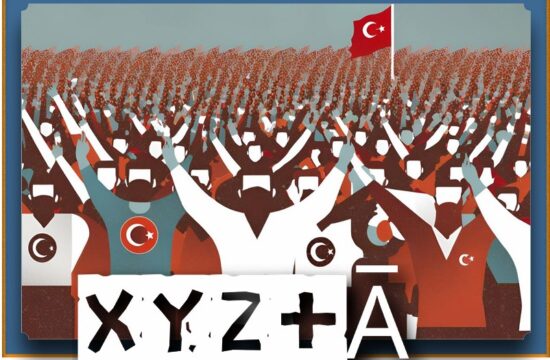
Following this incident, the Turkish national team stood in silence to honor the victims before taking the field for their soccer match against Iceland in Konya. In the 42,000-seat stadium, this moment of silence was met with protests. Slogans were chanted almost in support of the attackers. (Diken, 2015)
Pro-government press outlets, however, published reports that ignored the perpetrators of the attack and portrayed as the aggressor a political party labeled as “separatist”. (Tunçay, 2017)
Since the October 10 attack did not result in justice that would ease the conscience of society (finding and punishing the perpetrators), it remains a social trauma that persists in the collective memory and continues to be remembered through annual commemorations.
Mourning as a political
battleground – methods against absolute impunity
The social traumas experienced in Türkiye and the subsequent processes have also affected social mourning processes, particularly in terms of access to justice.
Any incident that those in power attempt to cover up, hiding their connections to political parties or groups within the ruling power or state organs, naturally triggers a response in society, leading to solidarity and rituals, and a renewed search for justice.
Regardless of the form of social loss, even the slightest connection to the policies of the government is often met with attempts to render the trauma and subsequent mourning invisible and to punish it with a kind of “enemy law,” as mentioned above, which is a phenomenon frequently encountered in Türkiye’s history.
Even a mere listing of examples and an attempt to tell their stories would require pages of work.
Each social trauma, whether it be a mine collapse, a flood, or an earthquake disaster, where responsibility lies to some extent with the government or its supporters or with segments protected by the government, is faced with implicit or explicit measures by state forces.
In some massacres, the perpetrators are either escaped and left unpunished or receive light sentences in trials and are released. In some cases, those convicted in court are later “acquitted” by creating new criminals. The most typical example of this was seen in the 1978 Kahramanmaraş Massacre trial.
This situation particularly affects the country’s religious and ethnic minorities, as well as political or ideological organizations or individuals deemed “enemies” of the dominant ideology.
Whatever the type of social trauma, in every incident that conflicts with the authorities or the dominant ideology, the mourning of the victims can take on a “political” form, even if it is independent of their own intentions.
Searching for the disappeared people, demanding the funeral of a loved one, and demanding that the perpetrators be found and brought to justice entails a struggle against the state mechanism of the authorities and administrations.
Returning to the example of the October 10 Ankara Train Station massacre, the annual commemorative events (mourning) are often met with prevention by security forces and the use of physical and excessive violence.
Hence, social mourning processes are combined and experienced together with political struggle.
The strategy of “human memory is subject to forgetfulness”
or neutralizing the impact of disasters through manipulation,
disinformation, and polemics – the struggle for absolute control over the agenda
In cases of social trauma, ruling powers often use media organs (in Turkey today, nearly 90% of mainstream media organs are under the direct control and management of the ruling powers) to blame those who have suffered trauma or victimization, or to misdirect attention toward crime or criminals, which is a widely used method.
The widespread use of social media tools and applications, shaped by information technologies, has become a decisive factor in the pollution of information or misleading guidance.
Irene Khan, UN Special Rapporteur on Freedom of Opinion and Expression, makes the following observation in her 2021 report; (Leidel, 2024)
„Digital technology has made feasible ways for various actors to create, disseminate, and amplify false or manipulated information on an unprecedented scale, speed, and reach for political, ideological, or commercial purposes.“
In today’s world, where even elections can be won using such methods, criminals are able to conceal themselves, society is misdirected, and victims can easily be turned into perpetrators.
Hannah Arendt mentioned the following in an interview in 1974; (Leidel, 2024)
“If everyone always lies to you, the result is not that you believe the lies, but that no one believes anything anymore. …
… a society that no longer believes in anything cannot make a decision. It lacks not only the capacity to act, but also the capacity to think and judge. And you can do whatever you want with a society like that”
This is, in a way, what governments and dominant political structures want. To create a society made up of people who can do whatever they want. While this is being created, the conditions desired to prevent victims of social trauma from exercising their right to mourn are also being established.
“An unfair society is harsh and cruel to those who have suffered loss due to a crime. Such a system is so demanding that it expects the victim not to seek justice for the crime committed. It is inconsistent with the
claim of providing justice. It gives the impression of being easily disrupted and scattered because it proves incapable of maintaining order, creating a sense of insecurity.” (Köşkdere, 2025)
A barricade is erected against those who wish to mourn, not only through the coercive means of the state, but also through the reactions or lack of reactions of the masses under the influence of the hegemony of power.
The accountability of public officials at all levels as a pre
requisite for the genuine right to mourn
Justice has been a controversial concept since the ancient Greek philosophers. It has not been fully defined from a legal perspective.
Nevertheless, the justness of court decisions implies that they are rendered “in accordance with a specific rule or system of rules.” (Güriz)
Societies expect justice not only in court rulings but also in the actions of governments.
The concept of impunity, which we now encounter more frequently, is used in relation to “serious and systematic human rights violations committed by actors created or tolerated by the state itself, or resulting from the lack of oversight of the state and its institutions.” (Hafıza Merkezi, 2011)
In our recent history, impunity has become a prominent issue. As it becomes evident that perpetrators who are arrested are often repeat offenders who have been arrested and tried for the same crime before, and that they receive light sentences or are released early on parole, this situation undermines public confidence in justice.
A declaration signed and published by almost all bar associations in Türkiye makes the following observation: (İstanbul Barosu, 2024)
“Especially in recent times, the revelation that the perpetrators of crimes that have caused outrage in society and been reflected in social media and news reports had previously been convicted of one or more
crimes has reinforced the perception among the public that convicts do not receive sufficient punishment and that their actions go unpunished.”
We have already stated above that it is the government who creates the problem of impunity. They continue to do so, on the one hand, through reforms made in the penal system (aimed at emptying prisons) and, on the other hand, through the methods they actually implement to protect their supporters.
The legal regulation holding prosecutors and judges accountable for their decisions was abolished in 2011 in order to create a “judiciary under the authority of the ruling power.” By this means, prosecutors and judges who brought cases and issued rulings in line with the wishes of the ruling power were placed under protection.
Over the past 20 years, all state institutions in Türkiye have come under the control of the ruling power. In other words, a party state has been established, and this situation has been described as a revolution by the ruling party’s loyalists. The ruling party (and its partners), which claims to oppose the regime of tutelage, has placed all structures that should be autonomous and independent directly under its chain of command.
Under such a structure, the judiciary began to make decisions not according to normative law, but according to party decisions and demands, similar to the Third Reich regime in Germany between 1933 and 1945 (Nationalsozialistische Deutsche Arbeiterpartei).
Whether it is a workplace murder or a bomb attack, the justice system operating in this manner inevitably leads to the trauma experienced by society becoming even more severe, resulting in the exact opposite of the healing process expected during mourning.
“Justice” already loses its meaning in circumstances where a prosecutor who files a case that the government disapproves of, or a judge at any level who issues a ruling that the government disapproves of, is removed from office.
The first step to eliminate this irregularity is a legislative change that will make judges directly accountable for their decisions, just as they were before 2011.
The second step is to remove the requirement for government approval to prosecute public officials. All public officials who engage in unlawful acts and proceedings must be brought before an “independent” judiciary. The key element here is the independence of the judiciary. Otherwise, within a judiciary that has lost its independence, a public official may still face sanctions through the judicial system by the government or its supporters simply for acting in accordance with the law.
The right to resist under
conditions where mourning is prevented
The concept of the “right to resist” in the fields of law and politics has a long history. The right to resist has been included in many fundamental texts as part of the concept of human rights, which emerged particularly from the early 18th century onwards.
Naturally, the main discussion area of the concept is the conflicts between governments and society. It has been used to express the defense of the people’s rights against oppressive regimes and the effort to change oppressive regimes.
There are two main traditions in Islamic political and legal thought. The first one requires absolute obedience to the ruler (caliph or imam). The other, in contrast, deemed it necessary to resist (rebel against) the oppressive and un-Islamic regime and to change it. Nevertheless, we can say that they adopted a rather cautious stance regarding resistance and changing the regime, particularly the Hanafi school (taking into account their experiences). If society does not have the means to change the government, then resistance should be avoided.
Specifically, two fundamental elements are required for resistance to be considered a right in law; either it must derive its source from the law, or the authority exerting the oppression (the government) must have lost its legitimacy. Without a doubt, oppression cannot be defined solely as being perpetrated by those in power; oppression by the majority against the minority may also be a matter of concern. In such circumstances, what is expected of a state governed by the rule of law is to ensure that everyone’s rights are protected. Without an effort in this regard, the victim will face a double burden. Türkiye has experienced and continues to experience numerous examples of this.
When we approach the right to resist from the perspective of legal norms, the view that best reflects the general consensus is as follows; (Taşkın, 2024)
“In order for resistance to be recognized as a right, it must be protected by law, or in other words, it must comply with conditions protected by law.”
Obviously, this can be considered a quite implicit evaluation. From a theoretical perspective, the right to resist has not been defined by normative law, and its boundaries have not been delineated.
Nevertheless, neither the 1961 nor the 1982 Constitutions have deemed the exercise of the right to resist to be unlawful. Therefore, resisting injustice and lawlessness is generally accepted as a legitimate right under the law.
The mere existence or protection of a right under the law may not necessarily give rise to a right to resist or may not result in resistance. All of these may be shaped according to general judgments within society, conditions arising from beliefs and ideas, power balances, and many other variables.
Looking at the history of Türkiye, there have been circumstances in which minorities have faced conditions that prevented them from mourning, even though it was legally protected, without any possibility of resistance. The vast majority of victims still living in Türkiye who suffered attacks, forced displacement, and massacres targeting Jews, Orthodox Christians, Armenians, Alawites, and Kurds are unable or unwilling to mourn publicly
On the other hand, there are many examples of resistance to defend one’s identity, faith, thoughts, and rights, including mourning, despite all the oppression. Examples of resistance that have transformed into a force transcending the pressures of power through their social legitimacy are also shaping the momentum of social struggle.
If we recognize grief as a fundamental human right, then opposing any attempt to obstruct this right is essential for the protection of that right.
As a consequence, resistance against oppression becomes one of the key elements of social struggle. The rise and legitimacy of resistance movements will, eventually, create the social conditions for victims of social trauma to reveal the grief they have hidden and to be able to experience their grief.
* The author of this article has no academic training in either discipline. This article will focus on the practices encountered and the difficulties faced, rather than engaging in a debate about the findings and recommendations of the disciplines mentioned in the text.
References
Cumhuriyet Gazetesi. (2015, 10 11). Barış İçin Yastayız. Retrieved from www.cumhuriyet.com.tr: https://egazete.cumhuriyet.com.tr/oku/192/2015-10-11/0
Diken. (2015, 10 13). Konya’da ’saygı duruşu‘: Ankara’da hayatını kaybedenler yuhalanıp ıslıklandı. Retrieved from www.diken.com.tr: https://www.diken.com.tr/konyadasaygi-durusu-ankarada-hayatini-kaybedenler-isliklandi/Din İşleri Yüksek Kurulu. (n.d.).
Güriz, A. (n.d.). Adalet Kavramı. Retrieved from www.anayasa.gov.tr: https://anayasa.gov.tr/media/4808/adnan.pdf
Hafıza Merkezi. (2011). Cezasızlık Nedir? Retrieved from www.hakikatadalethafiza.org: https://hakikatadalethafiza.org/cezasizlik-nedir
İnsan Hakları Evrensel Beyannamesi. (n.d.). Retrieved from www.hsk.gov.tr: https://www.hsk.gov.tr/eklentiler/dosyalar/9a3bfe74-cdc4-4ae4-b876-8cb1d7eeae05.pdf
İstanbul Barosu. (2024, 02 05). Cezasızlık Algısı Hukuka Güveni Zedelemektedir. Retrieved from www.istanbulbarosu.org.tr: https://istanbulbarosu.org.tr/HaberDetay.aspx?ID=18641&Desc=Cezas%C4%B1zl%C4%B1k-Alg%C4%B1s%C4%B1-Hukuka-G%C3%BCveniZedelemektedir
Karatay, G. (2025, Kasım 15). Bir yüzyılın karanlık aynası. Retrieved from www.evrensel.net: https://www.evrensel.net/haber/584050/bir-yuzyilin-karanlik-aynasi
Köşkdere, A. A. (2025, 06 15). Yas tutmak niçin önemlidir. Retrieved from www.bursapsikiyatri.com: https://www.bursapsikiyatri.com/makale.php?id=777
Leidel, S. (2024, 03 17). Dezenformasyon: Güncel tanımlar ve örnekler. Retrieved from www.akademie.dw.com: https://akademie.dw.com/en/disinformationcurrent-definitions-and-examples/a-67786912
Özkan, B., & Özel, Y. (2020, 12). Kayıp ve Yasa Psikososyal Yaklaşım. Retrieved from Psikiyatride Güncel Yaklaşımlar; Current Approaches in Psychiatry: https://dergipark.org.tr/en/download/article-file/919930
Taşkın, A. (2024). Baskıya Karşı Direnme Hakkı. Retrieved from www.barobirlik.org.tr: https://tbbdergisi.barobirlik.org.tr/m2004-52-17
Traverso, E. (2021). Ateş ve Kan (Avrupa İç Savaşı: 19141945). Ankara: Heretik Basın Yayın.
Tunçay, E. (2017). Medyada Nefret Söylemi: Ankara Patlaması Örneği, Marmara İletişim Dergisi. Retrieved from www.dergipark.org.tr: https://dergipark.org.tr/tr/download/article-file/328367
Volkan, V. (2016, 09 2). Prof. Dr. Vamık Volkan: “Yas tutma biçimi parmak izi kadar bireysel”. Retrieved from www.uskudar.edu.tr: https://uskudar.edu.tr/haber/prof-dr-vamik-volkan-yas-tutma-bicimi-parmak-izikadar-bireysel/1683