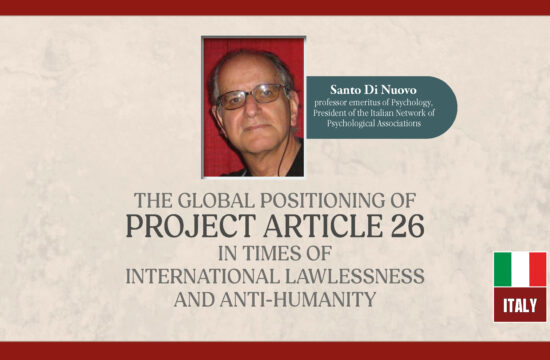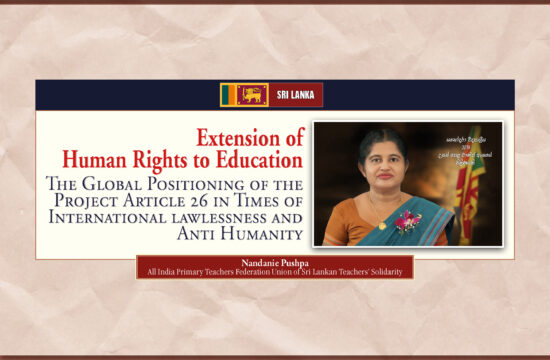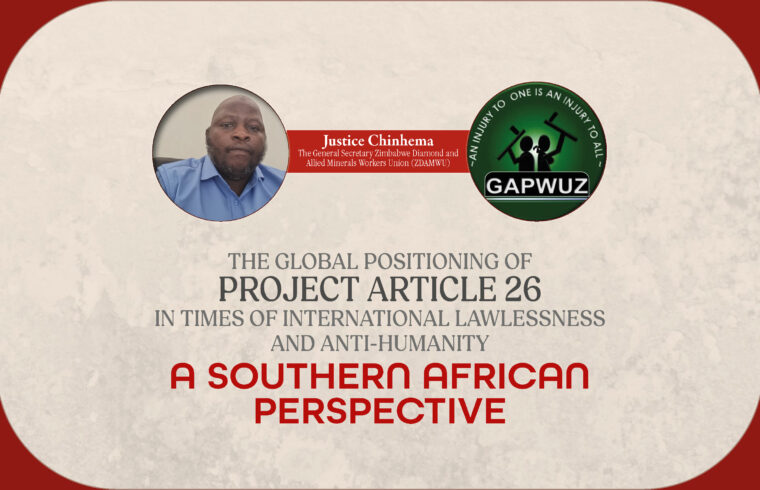
Justice Chinhema
The General Secretary Zimbabwe Diamond and Allied Minerals Workers Union (ZDAMWU)
Introduction: The Unravelling Fabric of Human Rights.
The Universal Declaration of Human Rights (UDHR) stands as a beacon of aspiration, laying out fundamental freedoms and rights for all humanity. Among its vital tenets, Article 26 unequivocally proclaims the right to education, envisioning a world where knowledge empowers, personalities flourish, and respect for human rights is universally cultivated. Yet, in an era increasingly characterized by international lawlessness, geopolitical instability, and acts of profound anti-humanity, these foundationalrightfaces unprecedented threats. While the concept of „lawlessness“ might conjure images of open conflict, it also manifests subtly through systemic inequities, disregard for international legal frameworks, and policies that undermine human dignity. This article examines the global positioning of the right to education, particularly through the lens of Article 26, against this turbulent backdrop, with a focused perspective on the distinct challenges and resilience observed within Southern Africa.
Article 26: The Cornerstone of Educational Justice
Article 26 of the UDHR is more than a statement; it’s a blueprint for societal development, stipulating:
- Universal Access: „Everyone has the right to education.“
- Free and Compulsory Elementary Education: Education „shall be free, at l ast in the elementary and fundamental stages“ and „shall be compulsory.“
- Accessibility to Higher Education: Technical, professional, and higher education „shall be made generally available and equally accessible to all on the basis of merit.“
- Purpose of Education: Education „shall be directed to the full development of the human personality and to the strengthening of respect for human rights and fundamental freedoms. It shallpromote understanding, tolerance and friendshipamong all nations, racial or religious groups, and shall further the activities of the United Nations for the maintenance of peace.“
While the UDHR itself is not legally binding, its principles, particularly Article 26, have been enshrined and expanded upon in subsequent legally binding instruments like the International Covenant on Economic, Social and Cultural Rights (ICESCR) (Articles 13 and 14) and the UN Convention on the Rights of the Child (UNCRC) (Article 28), making the right to education a firmly established obligation under international law. These instruments underscore that education is critical not just for individual advancement, but for fostering human dignity, effective participation in a free society, and building peace.
Global Currents of Lawlessness and Anti-Humanity Undermining Education
The promise of Article 26 faces formidable global adversaries. „International lawlessness“ can be seen in:
- Armed Conflicts and Displacements: Wars and internal conflicts routinely destroy educational infrastructure, displace millions of children and teachers, and divert resources from schooling, effectively weaponizing the denial of education.
- Systemic Discrimination: Across various regions, specific groups—girls, ethnic minorities, persons with disabilities, refugees, and migrants are systematically denied equitable access to quality education, a subtle yet potent form of anti-humanity that entrenches marginalization.
- Climate Change and Disasters: Environmental catastrophes exacerbate eductional disruption, particularly in vulnerable regions, leading to school closures and population movements that sever educational continuity.
- Economic Austerity and Inequality: Global economic disparities and domestic policies prioritizing other sectors often lead to underfunded education systems, especially in developing nations, making quality education a privilege rather than a right.
These forces collectively erode the very foundations upon which Article 26 rests, turning a universal right into an unattainable dream for countless individuals.
The Southern African Perspective: A Region on the Frontlines
Southern Africa, with its complex history and diverse socio-economic landscape, offers a poignant case study of the struggle to uphold the right to education amidst these global challenges.
- Historical Legacy and Lingering Inequities: The region’s past, marked by colonialism and apartheid, created deeply entrenched educational disparities. Post-independence efforts have aimed to democratize access, but the legacy of unequal resource distribution, substandard facilities, and segregated educational pathways continues to affect quality and equity, particularly for marginalized communities.
- Socio-Economic Hurdles:
- Poverty and Cost Barriers: Despite policies for free basic education in any countries, indirect costs such as uniforms, transport, and learning materials remain prohibitive for impoverished families. In South Africa, for instance, rising school costs, even in public schools, deepen financial strain on families, often forcing parents into difficult sacrifices to ensure their children’s education. In Uganda, challenges in implementing free education policies highlight how parental contributions, though sometimes necessary for quality, can clash with the principle of free basic education.
- Infrastructure Deficits: Many rural and underserved areas lack adequat classrooms, sanitation facilities, electricity, and digital connectivity, severely limiting access to quality learning environments.
- Teacher Shortages and Quality: A dearth of qualified teachers, especially in critical subjects like science and mathematics, along with low morale and inadequate professional development, compromises educational outcomes.
- Migration, Displacement, and Undocumented Learners: Southern Africa faces significant internal and cross-border migration, often fueled by economic hardship or conflict. This creates a critical challenge in ensuring educational rights for displaced populations and undocumented learners. In KwaZulu-Natal, South Africa, a recent debate underscored the legal and humanitarian obligation to provide basic education to undocumented foreign learners, even as resource constraints pose significant policy dilemmas for authorities. This situation exemplifies how the principles of universal access enshrined in Article 26 are tested at national borders and within local communities.
- Governance and Corruption: Weak governance, corruption, and insufficient accountability mechanisms can divert funds intended for education, undermine policy implementation, and perpetuate inequities, further exacerbating the region’s educational challenges.
Despite these formidable obstacles, Southern Africa is also a region of resilience and innovation. Governments, civil society organizations, and local communities are continuously working to expand access, improve quality, and advocate for educational rights. Regional bodies like the Southern African Development Community (SADC) often promote educational cooperation and harmonization of standards, albeit with varying degrees of success.
The Imperative of International Law in a Disordered World
In times of „international lawlessness,“ the effectiveness of instruments like Article 26 might seem diminished. However, their continued existence and the mechanisms for their enforcement—however imperfect—remain crucial. International human rights law provides:
- A Normative Framework: It sets universal standards and benchmarks against which national policies and practices can be judged.
- Advocacy Tools: It empowers civil society, activists, and international bodies to hold states accountable and to advocate for the rights of the most vulnerable.
- Legal Recourse: For some, it offers avenues for legal challenges, as seen in cases pushing for education rights for undocumented learners.
The „anti-humanity“ of denying education to any child, regardless of circumstance, directly contravenes the dignity and potential that Article 26 seeks to foster. Upholding this right becomes an act of resistance against such dehumanization.
Conclusion: Reaffirming the Right to Education as an Anchor of Humanity
The right to education, as articulated in Article 26, is not merely about schooling; it is about human dignity, development, and peace. In an increasingly complex and fractured world, where „international lawlessness“ and „anti-humanity“ challenge the very fabric of global cooperation, the project of extending and protecting this right is more critical than ever. The Southern African experience highlights both the profound historical and contemporary challenges, from the legacy of inequality to the immediate pressures of poverty and migration. Yet, it also demonstrates a persistent struggle for educational justice.
Reaffirming the global positioning of Article 26 requires a concerted, multi-pronged effort: strengthening international legal frameworks, ensuring accountability for violations, increasing investment in education—especially in vulnerable regions—and fostering inclusive policies that leave no child behind. As the purpose of education, according to Article 26, is to develop the human personality and strengthen respect for human rights, investing in education is not just an obligation; it is the most fundamental strategy for building a more just, peaceful, and humane world, even in the face of its darkest challenges.