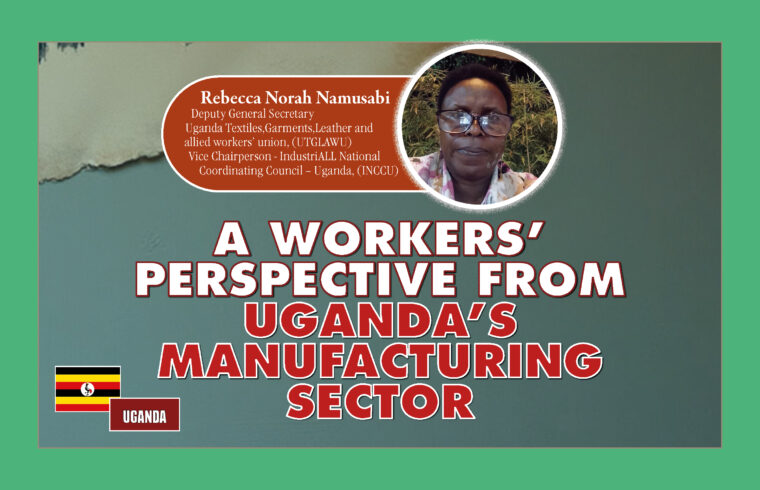
Rebecca Norah Namusabi
Deputy General Secretary
Uganda Textiles,Garments,Leather and allied workers’ union, (UTGLAWU)
Vice Chairperson – IndustriALL National Coordinating Council – Uganda, (INCCU)
Understanding international lawlessness and anti-humanity:
Key points:
- Growing disregard for international law and human rights
- Weak enforcement of labour protections
- Increasing exploitation of vulnerable workers
Declining respect for human dignity Impact on Uganda’s manufacturing workers:
Key points:
- Low wages and salary
- Un safe working conditions
- Poor OSH conditions
- Gender based violence and sexual harassments
- Ignorance on labour rights by the workers
- Exploitation in global supply chain.
- Refusal to recognize trade unions by the stubborn employers.
Manufacturing workers face daily challenges linked to precarious work in most of the workplaces.
WHAT IS PROJECT ARTICLE 26?
- Based on Article 26 of the universal declaration of human rights
- Promotes education as a fundamental human right.
- Education empowers workers and protects dignity Supports justice, equality and social progress.
Education empowers workers to understand and defend their rights.
Importance to workers in Uganda’s manufacturing sector
Key points:
- Promotes workers’ awareness of labour rights
- Strengthens worker confidence and empowerment
- Supports trade union education and organizing
- Reduces vulnerability to exploitation.
An informed worker is an empowered worker.
Role of Trade Unions and
leadership
Key points:
- Educate / train workers on their rights at work
- Advocate for fair wages and salary.
- Advocate for good work conditions
- Protect workers from exploitation and abuse • Train workers on the need to join union.
An informed worker is an empowered worker.
Project Article 26 strengthens trade unions
Conclusion and Recommendations
Key points:
- Training programs to enhance awareness so as to empower workers.
- Empower union leadership on negotiation skills.
- Train workers on the emerging climate change and just transition ensuring that no worker is left behind in the global struggle of technological transition.
- Local and cross- boarder Collaboration with other trade unions is essential
- Project Article 26 is a powerful tool for empowering workers, defending workers’ dignity and building a just and humane society especially in times of lawlessness.
- It gives us hope and direction as we continue our struggle for dignity, justice and decent work for all.