Abdulwahid Mohammed
What has been said in the heavenly religions, and what has been emphasized by philosophers and great educators, is that education is the source of positive change. In other words, through good education and teaching, the desired goals can be achieved. Education is an inevitable necessity for all times. Without this fundamental necessity, all other means and possibilities will not be sufficient to achieve the goals of humanity.
What has kept the Kurds alive is their culture, language, and identity. Obviously, these were preserved by previous generations. In other words, what has kept the Kurds alive is the education passed down from our ancestors. However, keeping these things alive is not enough, because today we are facing the challenge of keeping pace with the times and finding our place at the forefront of progress, or at least moving forward with it. Of course, a good education system is the driving force behind this movement.
Education in the Iraqi Kurdistan Region
It is true that the education process in the Kurdistan Region, and even in Iraq, has taken some steps forward in terms of administrative and technical affairs and various activities. However, in essence, because of many problems, it is still moving forward and backward rather than progressing steadily. What evidence do we have for this? Obviously, this situation depends on several reasons, including:
- Lack of budget.
- Imbalance in the distribution of resources and many shortcomings.
- Lack of training and continuous professional development.
- Lack of educational buildings and lack of continuous renovation.
- Weak material facilities in educational institutions.
- Lack of sufficient incentives to encourage students to attend school.
- Outdated curricula and weakness in the practical aspects of teaching lessons.
- Lack of attention to teachers‘ needs in terms of their living conditions and livelihoods.
- Political interference in the education process and educational institutions.
- Failure to place the right person in the right position.
Where We Are in This Era
In fact, when we analyze these reasons, what we said above becomes clear. We are living in a modern era, so we must ask ourselves: At what level is our educational process? This is why we always call for reform, and even for an educational revolution.
The educational process and professional service require everyone, as well as society as a whole, to acknowledge that we have gone through a very difficult experience. Education has been burdened with many responsibilities and has been expected to achieve what is required at this stage and in the future, but these goals have not been fully reflected in reality.
What do you remember from your studies? It is rare for a student to tell you something that has a deep and meaningful connection to what they studied. This needs to be carefully examined. Why do university teachers say that many students cannot even write their names properly? They were taught by the same teachers who graduated from universities. In my opinion, there is a major flaw in the system. In addition to the issue of university teachers and the forgetting of the subjects that students were taught, there are also other areas and subjects that need attention, including:
- Cleanliness and environmental protection.
- How to deal with older and younger people.
- Belief in social justice.
- Working to protect human rights and children’s rights.
- Belief in freedom of opinion and love of one’s country.
- Respecting teachers and recognizing the importance of educational institutions.
- Class discipline.
- Preventing the emergence of undesirable social phenomena.
Education Is in an Unenviable State
Unfortunately, solving these problems is difficult because they have accumulated over a long period of time. However, continuous work must be carried out to address them. Research and conferences should be held on each of these areas, but not merely for publicity or appearances; they should be organized for practical action and real solutions.
Of course, education cannot be built merely on words, speeches, and the reading of poetry and epic poems. Many things have been said and praised in the past, but what we see in schools and on the ground is very different.
There are many criticisms of this process, from kindergarten to the final stages of education. This is not only my opinion; it is also the opinion of many genuine educators. I do not mean violence, commercialization, the introduction of a completely new system, or a kind of police-like approach. I am talking about real education that stems from our society while making use of modern techniques and successful experiences from around the world.
After the uprising, the government’s lack of attention, and later the difficult period caused by ISIS and the abnormal relationship between the Kurdistan Region and the federal government, severe effects were created on the lives of employees in general and teachers in particular.
Artificial intelligence is now transforming many areas of life. People are facing a new reality in which technology is rapidly changing the nature of work and education. Therefore, people are caught between two major challenges: government indifference toward the introduction of modern education and artificial intelligence, and the rapid development of technology itself.
Some countries have already transformed their educational systems and placed the teacher at the center of the educational process. However, our education system does not yet fully reflect the basic goals of a healthy society.
Obviously, the educational process and teachers complement each other, and together they can achieve the desired goals.
Finally, we come to the conclusion that the alternative to education is more and better education.
There are a number of practical steps that must be taken seriously and decisively, including:
First: Education Must Become a Government Priority
First, education must be made a priority in the government’s program because there is no substitute for building a healthy society. There is a great deal of international experience in this regard. Some countries have supported their entire education system and their teachers. As a result, they have developed rapidly and have become highly competitive with countries such as Japan and other developed nations. This is only one example among many.
Second: Full Attention Must Be Paid to Teachers
Full attention should be paid to teachers in all aspects:
- Teachers should be respected and recognized as important members of society.
- They should receive their full monthly salaries on time.
- They should be provided with suitable working environments.
- They should continuously participate in professional development courses related to educational knowledge, teaching facilities, and modern teaching methods.
By providing these requirements, a motivated and caring teacher can be created who is able to use their abilities to provide education that meets the needs of students at different stages.
Third: Educational Buildings
Buildings are an important pillar of the education process. Some people believe that education can take place anywhere and that buildings are not essential. This may be true in extraordinary circumstances, but under normal conditions, proper educational facilities are necessary.
Sometimes there have been sufficient resources, so there should be no excuse for neglecting this important part of the education system. Unfortunately, there are still many shortcomings, and the solutions provided have not been adequate:
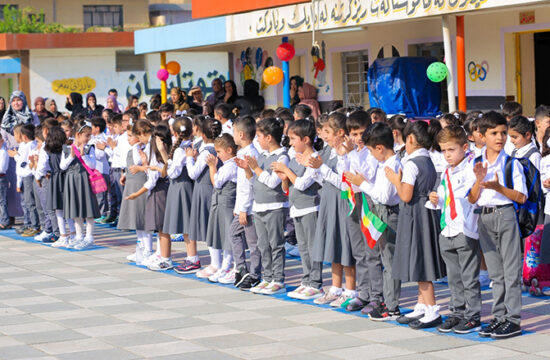
- There are still a large number of schools operating on a two-shift or three-shift basis.
- There are a large number of old, rented, and poorly maintained school buildings.
- A large number of buildings need renovation, and some are no longer suitable for educational purposes.
- There are many shortcomings in services such as clean water, electricity, kindergartens, laboratories, and playgrounds.
Together, these facilities form the foundation of a modern school building and create a favorable environment for the educational process.
Fourth: Lack of Sufficient Time for Education
The biggest problem affecting the annual educational process is the lack of sufficient instructional time. First of all, it must be understood that education is both a theoretical and practical process. There must be enough time for the educational process to be properly implemented and given its due importance.
In fact, the time available for the annual academic year has many shortcomings:
- The removal of Saturday from the school week has led to the lessons of that day being added to other days in order to fit the existing timetable.
- Reducing the number of lessons in order to fit six lessons into each day has created negative consequences, especially given the time constraints in two-shift and three-shift schools.
- Some practical and activity-based lessons are included in the timetable but are not actually taught because there are only five lessons available, which mainly cover the basic theoretical subjects in the classroom.
- The current academic year should not be limited to around 150 instructional days; it should be approximately 200 days, especially considering the current curriculum.
These problems have led teachers and students to complain constantly that they do not have enough time. Therefore, the academic period and study schedule must be reformed.
Fifth: Lack of a Practical Educational Calendar
Obviously, in order to have a successful educational process in all aspects, there must be a stable and clearly defined academic calendar.
The current calendar includes:
- Suspension of work.
- Various occasions.
- Natural breaks.
- Holidays.
- The days before and after holidays.
- The first-semester break.
- The long spring break.
- Other interruptions.
Apart from some necessary breaks, these interruptions have become a burden on the educational process and have seriously affected its continuity.
After all, what should an educational process with all these gaps look like?
Some of the simplest consequences are:
- When students are separated from school for long periods, it becomes very difficult for them to return to a regular routine of work and study.
- Long interruptions can have negative psychological effects and may sometimes contribute to students becoming involved in inappropriate activities.
For this reason, work must be done to ensure that the school year is conducted according to a full, legally defined academic calendar and is not subjected to personal or political interests.
Sixth: Continuous Professional Development
One of the important factors in good education is the continuous training and professional development of teachers.
There is an important truth that must be recognized: the world, in all fields, and especially in education, is constantly changing. Artificial intelligence is becoming an increasingly important part of many fields and activities.
A.
In the past, I can say that teacher training, in the sense of strengthening and updating teachers‘ knowledge and skills, has never been adequate.
B.
In some countries, there are continuous training processes that may continue for two years, but even these do not necessarily meet all the needs of a modern education system. There is considerable evidence that a lack of time often prevents teachers from participating effectively in training.
Sometimes the trainer themselves may not be able to perform the task effectively because of the large number of teachers involved. There are also other reasons that ultimately tell us that the current training process must be changed.
C.
There should be an independent institution responsible for continuous training and professional development, and sufficient facilities should be provided for it. The training process should also be connected to professional, moral, or material incentives and recognition for successful teachers.
Seventh: The Relationship Between Parents and Teachers
Obviously, the relationship between parents and teachers is an important factor in ensuring a proper educational process.
It is true that the teacher is a leader and educator within the educational process. Therefore, both sides need each other and must continuously coordinate whenever necessary, especially in this busy era when all kinds of technologies and tools are widely available.
Many children and students are spending excessive amounts of time using smart devices and the internet. It is very important to address and manage this reality.
- Parents and teachers should constantly coordinate with each other. One of the best steps would be to establish active councils, hold regular meetings, and gather detailed information about students and their families in order to find solutions to problems that arise.
- The government should regulate websites and online platforms that contribute to harmful forms of addiction among children and students at all educational stages, and this should be regulated by law while respecting legitimate rights and freedoms.
- At home, parents must take responsibility for their basic duties. Sometimes parents themselves contribute to this negative reality because children may become dependent on smart devices before parents recognize the problem.
- There are many problems in educational institutions, such as the use of pills and other harmful substances, smoking, and other undesirable behaviors that cannot all be mentioned here.
These are all consequences of the problems mentioned earlier, and they show us that the relationship between parents and teachers must be strengthened so that there can be continuous and caring education.
Eighth: Private Education
Although Article 34 of the Iraqi Constitution states that:
- Free education is guaranteed for primary education and for the eradication of illiteracy.
- Free education is available to all Iraqis at all levels.
- The state promotes scientific and cultural research.
- The Constitution also addresses the right to education and related responsibilities.
If we go back to the relevant provisions of the Iraqi Constitution, primary education is compulsory and free, while education at other levels is also supported by the state. However, in reality, we see a different situation.
In the academic year 2025–2026, there were reportedly 524 private schools, while in the current academic year the number has increased to 628 educational institutions. The rate is close to 9.5% of the total number of schools.
There should not be a major difference in the quality of education between private and public schools. However, in some places, private education has become an open business. This is also true of higher education. There are many examples that demonstrate this reality. However, the difference between private and public education remains significant.
Obviously, this has led those with greater financial resources to send their children to private schools, while those with limited or weak financial means depend on public schools.
This creates several problems:
- The class structure, which is a problem in itself, continues to develop, and social inequality becomes deeper.
- Better educational and employment opportunities may become more accessible to privileged groups at the expense of public education.
For this reason, the government must work to establish a realistic law regulating private education while also providing all the necessary means for high-quality public education. This would help reduce differences and prevent the further development of social classes based on access to education.
Ninth: Vocational Education
I firmly believe that vocational education is a very important foundation of the education process, and that the school should be a center for developing workplace skills.
I insist that if any country or educational institution does not give vocational education an appropriate place within the educational system, it will face difficulties in preparing students for the labor market.
How can vocational education be improved? One important approach is to go to the market and ask employers and businesspeople what skills they need and what should be included in vocational education.
Most countries are constantly trying to connect education with the labor market. In both neighboring countries, Iran and Turkey, considerable attention has been paid to vocational education so that middle-level skilled workers can be prepared for different factories, companies, and centers.
For example, in Iran, there are reportedly hundreds of types of vocational education programs, ranging from basic to advanced fields. In Iraq in general, and in the Kurdistan Region in particular, however, this area has not yet received sufficient attention.
Many students who do not have the opportunity or desire to attend academic high schools could benefit from vocational education. There is therefore a need to renew and strengthen this field and provide students with opportunities to develop practical skills and improve their employment prospects.
Although these efforts have come late, if they are continued, expanded, and supported with good material facilities, they could lead to very positive consequences, such as:
- We will have a large number of skilled middle-level workers.
- They will be able to enter the workforce earlier, especially if there is a law regulating their education and employment.
- A significant amount of the country’s capital will remain within the country because, at present, we often have to rely on foreign labor for many types of work.
- The dominance of universities will be reduced, and universities will be encouraged to improve the quality of education and specialization instead of simply trying to accommodate increasing numbers of students.
In order to establish good vocational education, serious work must be done to ensure that:
- There are suitable and well-equipped buildings specifically designed for this type of education.
- All teachers are experts in their fields and receive regular training courses, including opportunities for training abroad.
- All necessary equipment and tools for different fields are made available and continuously updated.
- Students who are admitted are appropriately selected so that they receive the education that suits their abilities and interests rather than simply being admitted to fill classrooms.
- Vocational education has a full and independent budget to meet its current and future needs, because the availability of financial resources is one of the major challenges in the region.
- There should be a special law regulating students‘ theoretical studies and fieldwork and guaranteeing appropriate employment opportunities through cooperation with employers.
Tenth: Balance of Educational Staff
Obviously, the proper distribution and stabilization of educational staff have a great impact on the proper functioning of the education process.
From this point of view, the relevant authorities must make every effort to achieve a balanced distribution of teachers. There have been problems related to political influence, favoritism, and interference. Therefore, achieving a proper balance has become an inevitable necessity.
There is also no sufficient employment in some areas, while approximately 12,000 teachers have reportedly retired during the past two years.
There are several problems:
- A large number of teachers are concentrated in the centers of major cities. There is a significant difference between one educational center and another.
- The number of teachers in districts and remote areas is always lower than in city centers. This is a fundamental problem. How can it be addressed? Certainly, teachers working in cities will not voluntarily move unless appropriate incentives are provided.
- There are specialists in the major cities who are already difficult to replace, let alone in areas outside the cities.
- I believe the solution is to recruit teachers according to actual needs. Despite the large number of retirements, we are still waiting for the retirement of those born in 1966 and 1967. The staffing problem will certainly become greater.
- It should be understood that the Ministry of Education, like any other major administrative institution of the state, cannot be effectively managed without sufficient staff, resources, and expertise. There is no simple solution to this problem. The necessary resources and professional expertise must be provided.
Eleventh: The Supervisory Unit
At the beginning of the modern education process, which dates back to 1921, there were inspectors who played an important role. They guided principals, assistants, teachers, and students, and also contributed to cooperation with parents.
However, with the introduction of several educational models that were sometimes little more than imitations of other systems, the role of the supervisory institution became limited.
I have heard this opinion from senior education officials. Later, training programs were introduced alongside the supervisory process. Personally, I do not believe that separating the two functions is necessarily the best approach for several reasons:
- Both sides enter educational institutions, and this may consume additional time.
- The responsibilities of both sides are closely related because they ultimately interact with and support teachers.
- I believe that a supervisor can also play the role of a trainer because the task of both positions includes guidance, support, and explanation. I have been a teacher since the mid-1970s.
- I believe that the supervisory process should be given greater attention and that its responsibilities should be strengthened. I am sure that administrative and educational work would then be conducted more effectively.
Conclusion
In fact, education needs a solution, even a white educational revolution—a peaceful and constructive transformation of the education system.
If this is not done, the existing system will not produce the outcomes and graduates that we want.
We must ask ourselves important questions:
What characteristics should an educational manager possess?
What are the duties of the staff working in educational institutions?
How can political parties and political interests be prevented from interfering in educational institutions?
How can we ensure that the right person is placed in the right position?
How should the curriculum and its standards be developed?
These questions require serious answers, practical research, and decisive action.
Education is the foundation of society. If we want a healthy, developed, and responsible society, we must build an education system capable of preparing students for the present and the future. This requires supporting teachers, improving schools, developing curricula, strengthening vocational education, ensuring continuous professional development, involving parents, using modern technology and artificial intelligence appropriately, and protecting educational institutions from unnecessary political interference.
The future of society depends greatly on the quality of its education. Therefore, education reform should not remain a slogan. It must become a continuous, practical, and collective process.