(Autumn 2026)
The demands and policy documents drafted by major Italian student unions and collectives (such as the Student Union, the High School Students Network) focus on both specific legislative reforms and general structural issues.
Some recent reforms introduced by the Ministry of Education are contested:
- The School Decree (Decree-Law 71/2024 and subsequent amendments) with new regulations, particularly those concerning inclusion, assessment processes, and the management of school staff. More in detail, the Ministry plan aims to manage the integration of students with a migrant background or those lacking advanced language proficiency. A maximum limit of 30% foreign students per class is established. If this limit is exceeded, the additional foreign students must be redirected to other nearby schools. Students (and also many teachers) view this measure as highly exclusionary and discriminatory, warning of a real risk of educational segregation resulting from the forced reassignment of students to different school sites, far away from home in areas where there are many immigrants.
The legislative package includes a restructuring of the overall educational offering, featuring an increased focus on digital technologies in primary schools. It also tightens the criteria for evaluating the performance of school principals—basing these assessments primarily on bureaucratic factors and the ability to enforce discipline, rather than on educational effectiveness.
As regards discipline, the Bill on Conduct Assessment has drawn heavy criticism, arguing that it seeks to introduce a punitive, authoritarian, and repressive school model, rather than an inclusive one.
The „4+2 years“ Model Reform for Technical and Vocational Schools is a primary political target. The reform shortens the high school curriculum from five to four years for technical and vocational institutes, linking them directly to a two-year program at ITS (Higher Technical Institutes). Students denounce this model as an attempt to subordinate public education solely to the profit motives of private enterprises.
Relevant economic and social demands are focused by the students in their official statements—as well as during sit-ins and occupations of schools:
- Public funding and military spending: The core slogan of the protest, „Money for schools, not for weapons“ represents the demand for massive structural investment in public education, to be funded by cutting expenditures allocated to national defence and the supply of arms for international conflicts.
- The housing crisis and increasing rents: Within the high school and university sector, the protest is linked to the „tent movement“. Students deprecate a complete lack of investment in the right to education and public student housing, compounded by unsustainable rental costs.
- Rundown school infrastructure: There are widespread reports regarding the structural condition of educational facilities, highlighting issues such as collapses, water leaks, malfunctioning heating systems, and the persistent presence of ongoing and unfinished construction work.
- Right to psychological support: There is a call for the structural integration of psychologists into all schools and universities to address the widespread distress among the student population. This measure, proposed with Parliament initiatives, was opposed and refused by the Ministry of Education.
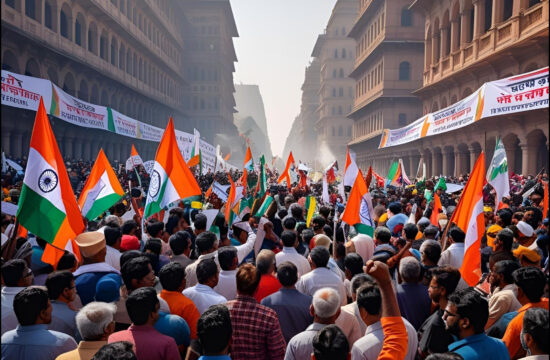
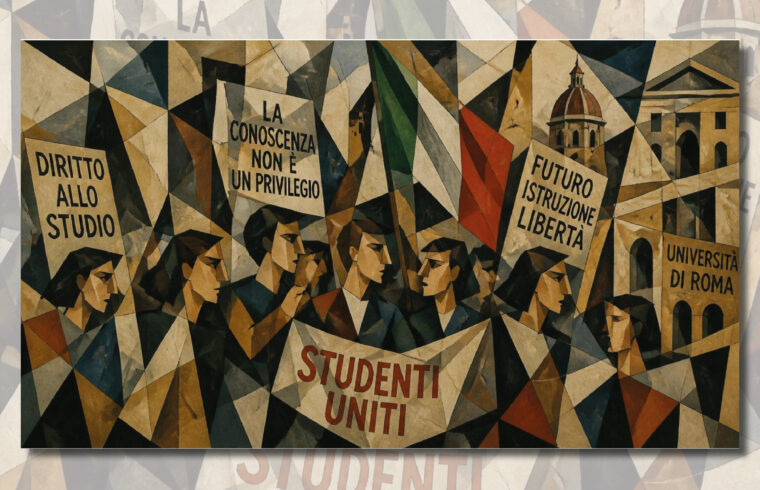
In October 2026 the protest has entered a phase of significant intensification, with a massive wave of demonstrations coordinated by student collectives and unions.
The national mobilization saw an estimated 400,000 young people take part across more than 40 Italian cities. Students mobilized actively from the North to the South (including Turin, Milan, Genoa, Bologna, Rome, Naples, and Cagliari). Demonstrations in major cities were marked by high tension. In Rome, thousands of students marched to the Ministry of Education. In Milan, Turin, and Bologna, student protests intersected with social movements opposing the rising cost of living, leading to intense street clashes, police charges, and arrests. Beyond street marches, self-managed occupations have begun in many high schools across Italy.
Student movements have declared a state of permanent mobilisation and expressed their intention to expand blockade-style actions—modelled after French student movements—while setting the stage for further large-scale national protests.