Formation, achievements, and the struggles of revolutionary student organising under imperialism and neocolonialism
Introduction: The Student Question in Kenya
The history of student organising in Kenya is inseparable from the broader struggles for freedom, democracy, social justice, and economic transformation. From resistance to colonial rule to contemporary struggles over education, unemployment, the cost of living, and political accountability, students have repeatedly demonstrated their capacity to challenge established institutions and demand a different social order. Universities are not isolated spaces removed from society’s contradictions. They are institutions embedded in an economic and political system shaped by class inequalities, unequal access to resources, and competing social interests.
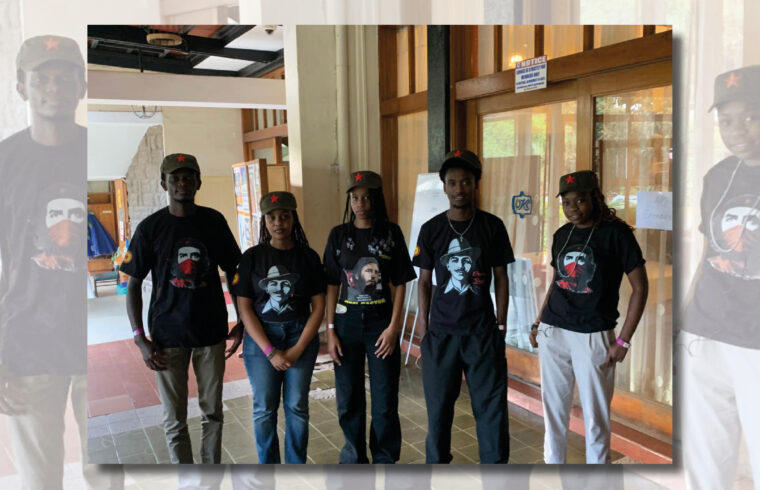
It is within this context that the Revolutionary Students Commission (RSC)emerged in 24th November 2024, seeking to develop a conscious, politically organised student movement grounded in Marxism-Leninism, socialism, anti-imperialism, and international solidarity. Its formation represented an effort to address a fundamental weakness in student politics: the tendency to separate immediate student grievances from the broader economic and political structures that reproduce them.
The RSC approaches student organising as both a political and an educational responsibility. Its objective is not merely to protest against individual administrative failures or demand temporary concessions, but to cultivate students who can understand the material conditions shaping their lives, identify the interests behind existing social arrangements, and organise collectively for fundamental social transformation.
For the Commission, the struggle for affordable accommodation, the right to education, democratic participation, and academic freedom is connected to the wider struggle against exploitation, economic dependency, and neocolonialism. These are not separate questions. They are different expressions of the same fundamental challenge: how to build a society in which the interests and needs of ordinary people take precedence over the interests of privileged political and economic elites.
The development of the RSC must therefore be understood through both its achievements and the difficulties it has encountered. Its experience demonstrates the possibilities of revolutionary student organising in Kenya, but also the political, economic, and institutional obstacles facing a young movement attempting to establish itself as a conscious student vanguard.
- The Formation of the Revolutionary Students Commission
The Revolutionary Students Commission was established in 24th November 2024 amid continuing debates about the direction of student politics in Kenya. For decades, student organisations have provided platforms for challenging rising education costs, inadequate accommodation, poor university services, restrictions on student participation, and broader social injustices.
However, the existence of student grievances does not automatically produce revolutionary consciousness. Students may mobilise against an immediate problem without examining the economic relationships, political decisions, and institutional arrangements that reproduce it. Similarly, student leadership can become preoccupied with elections, personal advancement, and negotiations with university administrations while losing sight of the material conditions affecting the majority of learners.
The RSC emerged with the ambition of addressing this problem through a revolutionary approach to student organising. Drawing on Marxist-Leninist political theory, it emphasises class analysis, collective struggle, political education, and the relationship between economic power and political authority.
Its anti-imperialist orientation places Kenya’s social and economic conditions within the wider international system. It examines how foreign economic influence, debt dependence, unequal international trade, and external political pressures can constrain national development and influence the distribution of resources.
From this perspective, the challenges facing Kenyan students cannot be understood exclusively as administrative problems. They must also be examined in relation to public financing, economic policy, the distribution of national wealth, and the priorities guiding the development of higher education.
The RSC’s formation consequently represented an attempt to unite ideological development with practical engagement in students‘ everyday struggles. It seeks to make revolutionary theory relevant to the immediate experiences of learners while developing an organisation capable of sustaining political education, collective action, and solidarity.
The Commission’s emergence also reflects a broader question confronting progressive student movements: how can a relatively small organisation build a mass base without abandoning its ideological principles? The answer lies in connecting political education with the actual needs of students, developing democratic organisational structures, and demonstrating through practical work that collective organisation can achieve meaningful results.
- The RSC as a Conscious Student Vanguard Movement
The concept of a student vanguard is central to understanding the RSC’s political orientation. A vanguard is not simply a group that declares itself more politically advanced than others. Its legitimacy must be demonstrated through its understanding of social conditions, its ability to organise collectively, its commitment to political education, and its relationship with the wider student population.
For the RSC, consciousness is not automatically produced by attending university or acquiring academic qualifications. It develops through the study of society, critical engagement with political ideas, collective reflection, and participation in struggles over material conditions.
Political education therefore occupies a central place in the Commission’s work. Students must be able to examine why education becomes increasingly expensive, why accommodation shortages persist, why graduates face uncertain employment prospects, and why the resources required to address social needs are distributed unevenly.
Marxist political economy provides a framework for investigating these questions by examining class relations, ownership, production, exploitation, and the relationship between economic power and the state. Anti-imperialist analysis extends this inquiry to the international structures that influence national economic choices and development.
However, revolutionary theory must not become detached from everyday life. Its value lies in helping students understand their circumstances and develop effective responses. Political education must therefore complement practical organising around accommodation, education costs, student representation, academic freedom, and access to essential services.
The RSC’s conception of a conscious student vanguard also demands internal accountability. An organisation cannot claim to represent students merely because it possesses an ideological programme. It must listen to students, involve them in decision-making, explain its positions clearly, and demonstrate that its activities respond to their concerns.
The ultimate objective is to develop students who are not merely spectators of political events, but active participants capable of analysing social conditions, organising collectively, and contributing to the wider struggle for democratic and social transformation.
- Achievements: Connecting Revolutionary Theory with Practical Struggle
The achievements of the RSC must be understood in relation to its relatively short existence, its available resources, and the difficult environment in which it operates. Since its formation, the Commission has sought to demonstrate that revolutionary student politics can move beyond theoretical discussions and engage directly with the material conditions of students.
3.1 The struggle to reduce accommodation fees at the University of Nairobi
One of the Commission’s significant reported achievements was its organisation of a protest at the University of Nairobi demanding a reduction in accommodation fees from KSh 40,000 to KSh 20,000—half the original amount.
The campaign emerged from a fundamental question confronting students: why should access to university accommodation become an increasingly heavy financial burden for learners and their families? Accommodation is not an optional luxury for students who must attend classes, study, and participate in university life. It is an essential condition for accessing education.
By organising around the proposed reduction, the RSC sought to transform an economic grievance into a collective political demand. The campaign demonstrated the importance of identifying a concrete problem, communicating a clear demand, mobilising affected students, and confronting the institutions responsible for decisions affecting their lives.
The struggle was not easy. The protest was accompanied by arrests, illustrating the risks that can accompany confrontational student mobilisation. Nevertheless, the campaign placed the question of accommodation costs at the centre of student advocacy and demonstrated the potential of organised pressure to challenge university policies.
The demand to reduce fees from KSh 40,000 to KSh 20,000 was significant because it translated the abstract principle of affordable education into a specific and understandable economic objective.
For the RSC, the lesson extends beyond accommodation. When students organise around a shared material interest, they can develop a stronger understanding of their collective position and the importance of solidarity. The campaign also illustrates why revolutionary organising must begin with the actual problems students experience rather than relying exclusively on abstract political language.
Its longer-term significance lies in the organisational experience gained: mobilising students, articulating demands, navigating institutional resistance, and demonstrating that the cost of education is a question of public concern rather than an individual student’s private difficulty.
3.2 Participation in the October 2025 lecturers‘ strike
Another important aspect of the RSC’s development was its participation in the lecturers‘ strike in October 2025 in support of the lecturers‘ demands and their struggle for the release of those whose release was being sought during the industrial action.
This participation reflected the Commission’s understanding that student struggles cannot be separated from the struggles of workers. Universities depend on the labour of lecturers, non-teaching staff, administrators, and other workers whose conditions affect the quality and continuity of education.
When lecturers confront disputes over their employment conditions, remuneration, or the implementation of agreements, the consequences extend beyond the workplace. Students may experience interrupted learning, uncertainty over examinations, and delays in completing their studies. At the same time, the working conditions of lecturers influence the quality of teaching, research, and academic support.
A revolutionary student movement must therefore reject the artificial division between students and workers. Students are not simply consumers of educational services, while lecturers are not merely providers of those services. Both occupy positions within an educational system shaped by public financing, labour relations, and decisions about the allocation of resources.
The RSC’s participation in the October 2025 strike reflected an effort to build solidarity across these relationships. Rather than viewing the lecturers‘ struggle as an issue external to student politics, the Commission recognised the importance of collective engagement with the conditions affecting the university community.
This experience reinforces a fundamental principle of working-class solidarity: the struggle for accessible and quality education requires attention to the interests of both learners and educational workers.
The connection between student and worker struggles should not be based on slogans alone. It requires dialogue, mutual respect, an understanding of each group’s immediate demands, and a willingness to support legitimate collective efforts. By participating in workers‘ struggles, students can develop a broader understanding of the economic and institutional relationships that shape their own educational experiences.
3.3 Securing student leadership positions and influencing progressive policies
Through its political work and engagement in university student politics, the RSC has helped secure student leadership positions for some of its comrades in various universities in Kenya including University of Nairobi, Kenyatta University and Laikipia University. It has also sought to influence student leadership debates and promote progressive student policies.
These developments are important because student leadership structures provide opportunities to raise issues affecting learners, participate in institutional discussions, and advocate for changes in student representation and university governance.
Leadership positions, however, should not be treated as achievements in themselves. Their political significance depends on how they are used, whether they strengthen democratic participation, and whether they contribute to addressing the material concerns of students.
For the RSC, the presence of comrades in student leadership creates opportunities to connect organised political education with practical policy engagement. These opportunities can be used to advocate for affordable accommodation, transparent student representation, improved services, academic freedom, and greater accountability in decisions affecting students.
The challenge is to ensure that participation in student leadership does not lead to political accommodation or the abandonment of the organisation’s founding principles. Leadership positions should remain instruments for advancing collective interests rather than avenues for individual advancement.
The RSC’s future credibility in this area will depend on its ability to demonstrate the specific policies it has influenced, the positions it has helped secure, and the practical benefits that students have gained from these interventions.
3.4 Political education and ideological development
Political education remains one of the defining priorities of the RSC. Through establishing study cells. Study of Marxist theory, revolutionary history, political economy, and socialist thought, the Commission seeks to develop students‘ capacity to understand the forces shaping Kenyan society.
Its approach treats political education as a continuing organisational responsibility. Revolutionary texts are studied not merely as historical documents, but as sources of analytical tools that can be examined critically and applied to contemporary conditions.
This work is important in a political environment where public debate can be dominated by electoral competition, personality politics, and immediate political controversies. The RSC seeks to encourage students to examine deeper questions concerning class interests, economic inequality, imperialism, public resources, and the possibilities for social transformation.
Political education also supports organisational continuity. A movement that depends entirely on the enthusiasm of a few individuals can struggle to sustain itself when members graduate, face personal difficulties, or leave leadership positions. Developing the political understanding and organisational skills of a broader membership can help build a more durable movement.
3.5 Anti-imperialist organising and international solidarity
The RSC has sought to connect student politics in Kenya with struggles taking place internationally. Its solidarity initiatives and anti-sanctions organising concerning countries including Cuba, Venezuela, Iran, and Burkina Faso reflect an effort to encourage students to examine international relations through questions of sovereignty, economic pressure, and unequal global power.
The Commission has also maintained solidarity with Palestine, placing the question within its wider opposition to imperialism and its support for the rights of oppressed peoples.
These initiatives reflect the RSC’s view that the conditions affecting students in Kenya cannot be fully understood without examining the international economic and political environment. Questions of debt, development, trade, resource ownership, and external influence are connected to debates over national sovereignty and economic independence.
International solidarity also provides opportunities for exchanges with progressive organisations beyond Kenya. Such relationships can strengthen political learning, facilitate mutual support, and expose students to different experiences of organising.
For the RSC, internationalism must remain connected to practical work within Kenya. Solidarity with people in other countries should complement the organisation’s efforts to address accommodation costs, education, workers‘ rights, and democratic participation at home.
3.6 Building organisational capacity and a broader student base
The Commission has also sought to strengthen its organisational foundations through fundraising, student outreach, political programmes, and engagement with progressive organisations.
Its direction has included building a mass base, connecting with students‘ everyday struggles, developing political education initiatives, and examining reforms to student representation, including proposals concerning the delegate system.
These priorities reflect an understanding that a sustainable movement requires more than public statements and occasional demonstrations. It needs functioning structures, reliable communication, accountable leadership, and the capacity to organise consistently.
The RSC’s development should therefore be assessed not only by the activities it has undertaken, but also by the extent to which these activities strengthen participation, build political understanding, and create lasting organisational capacity.
- The Struggles Facing the RSC: Imperialism, Neocolonialism, and Political Repression
The RSC’s development has taken place within a difficult political and economic environment. The Commission identifies imperialism and neocolonialism as important structural challenges, while its experiences with arrests, legal proceedings, suspensions, and the reported mistreatment of comrades have raised additional concerns about the space available for revolutionary student organising.
These experiences must be understood at two levels: the broader structures that shape Kenya’s social and economic development, and the immediate challenges confronting students who organise against conditions they consider unjust.
4.1 Imperialism and neocolonialism: The structural challenge
From the RSC’s Marxist-Leninist perspective, imperialism is not simply a question of foreign governments exercising political influence. It concerns the organisation of international economic relations, the control of resources, the movement of capital, and the ways in which powerful states and economic interests can shape the development choices available to less powerful countries.
Neocolonialism describes a situation in which formal political independence coexists with significant economic and political dependencies. A country may possess its own institutions and national flag while remaining constrained by external financial obligations, unequal trade relations, foreign capital, and international economic pressures.
For Kenya, this perspective raises questions about public debt, the priorities of national expenditure, the distribution of resources, and the capacity of the state to meet social needs. It also invites examination of how economic policy affects public universities, education financing, employment opportunities, and the living conditions of working-class families.
The consequences are felt in the everyday experiences of students. When education becomes increasingly expensive, accommodation is beyond the reach of many learners, or graduates face limited employment opportunities, these conditions demand an examination of both domestic policy decisions and the wider economic structures within which those decisions are made.
The RSC’s challenge is to translate this structural analysis into accessible political education and practical programmes. It must demonstrate how questions of imperialism and neocolonialism relate to identifiable student concerns without treating every administrative problem as the direct result of a single external cause.
A rigorous revolutionary analysis must examine the relationship between international economic pressures, domestic political decisions, institutional priorities, and class interests. Doing so can help students understand both the external constraints on national development and the responsibilities of domestic institutions.
4.2 The detention of five anti-imperialist students following the France-Africa Summit
One of the most serious challenges reported by the RSC is the continued detention of five anti-imperialist student cadres following events surrounding the France-Africa Summit in Nairobi on 11 May 2026.
The Commission reports that the five students were arrested in connection with events at the summit and subsequently faced criminal proceedings. The RSC regards the case as politically motivated and maintains that repeated court appearances have taken place without the prosecution producing sufficient evidence to substantiate the allegations which were trumped up charges against its members. These remain the organisation’s claims and should be distinguished from findings formally established by the court.
One anti-imperialist cadre remains in jail because they have been unable to raise the money required for cash bail. Their continued detention has placed a heavy burden on the affected students, their families, and the organisation supporting them.
The consequences extend beyond the immediate loss of liberty. Prolonged detention disrupts academic progress, interrupts students‘ participation in university life, creates financial pressure, and places their educational futures in uncertainty. Students who should be attending lectures, preparing for examinations, and completing their studies instead face the uncertainty and expense of ongoing criminal proceedings.
This situation raises a serious question about access to justice: how does a person’s economic position affect their practical ability to secure release while awaiting trial? Although bail decisions depend on the circumstances of individual cases and applicable legal requirements, the inability to raise an amount set as cash bail can have devastating consequences for students from financially constrained backgrounds.
The case also illustrates the organisational difficulties faced by a young movement whose members require legal support while the organisation itself has limited resources. Court attendance, legal representation, family support, and public communication demand time and money that would otherwise be directed towards political education and campus organising.
For the RSC, the continued detention of these five cadres has become a test of solidarity. Defending their rights requires sustained attention to their legal proceedings, support for their families, accurate documentation of the case, and continued calls for due process and a fair trial.
The Commission’s position is that the case must not become a means of discouraging students from engaging in anti-imperialist politics. At the same time, the principles of justice require that the allegations, evidence, and legal decisions be examined through the proper judicial process.
4.3 The abduction and torture of Comrade Mulinge Muteti
Another deeply troubling experience by the RSC concerns the abduction of our Comrade Mulinge Muteti in September 2026 during activities associated with the Free All Political Prisoners protest.
Mulinge was held incommunicado for five days before being found in a severely weakened and injured condition. The RSC reports that he was subjected to brutal torture during this period, sustaining a broken leg, a neck injury, internal injuries, and severe burns to parts of his body reportedly inflicted with hot metal.
The circumstances described by his comrades paint a disturbing picture of the physical suffering and uncertainty associated with his disappearance. Being held incommunicado meant that his whereabouts and condition were unknown to those searching for him, leaving his family and comrades without reliable information about his safety.
Following his return, Mulinge required urgent medical attention for the injuries reportedly sustained during his ordeal. His condition also placed an additional financial and emotional burden on those responsible for supporting his treatment and recovery.
The RSC has interpreted the incident within the broader context of the dangers faced by activists involved in left-wing, anti-fascist, and anti-imperialist organising in Kenya. The Commission regards the experience as a warning about the vulnerability of political activists when their safety cannot be assured.
Responsibility for the reported abduction and torture must be established through a credible investigation. Nevertheless, the allegations are extremely serious and warrant thorough examination, appropriate medical documentation, and accountability for anyone found responsible.
International human rights standards prohibit torture and cruel, inhuman, or degrading treatment. Every person is entitled to personal security, protection from violence, and access to justice, regardless of political affiliation or ideology.
For the RSC, the case demonstrates that solidarity must extend beyond issuing statements. It requires practical assistance for medical treatment, support for affected families, careful documentation of alleged abuses, and continued demands for credible investigations.
Mulinge’s experience also illustrates the human costs of political activism when organisers fear disappearance, physical violence, or intimidation. Such experiences can affect not only the individuals directly targeted but also their families, comrades, and the wider communities in which they organise.
The Commission’s response must therefore combine solidarity with a commitment to human dignity, evidence-based documentation, and accountability. The demand for justice must remain grounded in the principle that no activist should be subjected to abduction or torture.
To support us and defend the Revolutionary Students Commission in the fight against imperialism donate through this link
https://www.mchanga.africa/fundraiser/139748
4.4 The suspension of comrades over solidarity with Palestine
The RSC also reports that some of its comrades have faced suspension from the University of Nairobi because of their position in solidarity with Palestine.
These suspensions raise important questions about academic freedom, freedom of expression, and the space available for students to engage in international political questions. Students have legitimate interests in discussing war, occupation, human rights, international law, and the responsibilities of governments and institutions.
For the Commission, solidarity with Palestine forms part of its wider opposition to imperialism and its commitment to international solidarity. It regards the ability of students to discuss the Palestinian struggle as an important component of political education and engagement with global affairs.
When students face disciplinary consequences for their political positions, it becomes necessary to examine the specific grounds for those decisions, the procedures followed, and whether the students‘ rights to fair treatment and expression have been respected.
The RSC considers the reported suspensions within the wider problem of how institutions respond to politically contentious student activism. The organisation argues that disciplinary processes should not be used to suppress peaceful political expression or discriminate against students because of their solidarity with an international cause.
For the RSC, defending comrades facing suspension is therefore connected to a wider concern about the democratic character of the university. Academic institutions should be places where students develop the capacity to question established positions, investigate international events, and engage critically with political ideas not places where bourgeois education is forcefully inflicted to students
4.5 The economic burden of revolutionary organising
Political repression and the struggle for adequate resources often reinforce one another. Legal proceedings, medical expenses, printing costs, venue hire, and travel can impose substantial financial demands on a young organisation.
The continued detention of the one student and the medical needs arising from Mulinge’s reported injuries illustrate how individual crises can place significant pressure on the RSC’s limited resources.
At the same time, the students whom the Commission seeks to organise frequently face financial hardship themselves. Accommodation, food, transport, learning materials, and other basic necessities compete for limited household resources.
This creates a difficult organisational reality. The RSC must support comrades facing serious difficulties while continuing to finance political education, student outreach, and campaigns around everyday concerns.
Addressing this challenge requires transparent fundraising, careful budgeting, collective contributions, and accountable management of resources. It also requires solidarity networks capable of sharing the burden of legal, medical, and organisational expenses.
The challenge is not simply to secure more money. It is to develop a sustainable organisational model that allows the Commission to maintain its activities while responding responsibly to the needs of its members.
4.6 Building a mass base amid political fragmentation
The RSC faces the continuing challenge of expanding its reach beyond a committed group of politically conscious students. Many learners are preoccupied with the immediate pressures of completing their studies, finding accommodation, meeting educational costs, and securing employment after graduation.
Others may distrust political organisations because of experiences with unfulfilled promises, leadership rivalries, or the use of student politics for personal advancement.
The Commission must therefore demonstrate that revolutionary politics can address practical concerns rather than merely provide explanations for them. Its ideological position will become meaningful to a broader student population when students can see how collective organisation relates to their everyday experiences.
This requires accessible political education, open discussions, consistent engagement, and clearly articulated demands. It also requires the ability to listen to students who do not initially share the Commission’s ideological outlook.
A vanguard movement cannot build a mass base by assuming that the broader population will automatically accept its conclusions. It must develop its arguments through discussion, demonstrate its relevance through practical work, and remain willing to learn from the experiences of the people it seeks to organise.
- Connecting Student Struggles with the Wider Working-Class Struggle
The RSC’s accommodation-fee campaign and participation in the lecturers‘ strike demonstrate the importance of connecting student organising with wider struggles over labour, public resources, and social conditions.
Students and workers occupy different positions within the educational system, but their experiences are interconnected. Students require affordable and accessible education, while lecturers and other university workers require fair working conditions and the resources necessary to perform their responsibilities.
When accommodation costs rise, students from working-class families face greater financial pressure. When lecturers engage in industrial action, students experience the consequences of disputes affecting teaching and university operations. When public resources are insufficient or poorly distributed, both groups may face the effects.
A revolutionary approach seeks to understand these relationships rather than treat each grievance as an isolated issue.
The October 2025 lecturers‘ strike provided an opportunity for the RSC to express solidarity with workers and recognise the importance of collective action beyond the student population. The accommodation-fee protest, meanwhile, demonstrated the importance of organising around a concrete economic demand directly affecting learners.
Together, these experiences point towards an approach in which students participate in their own struggles while learning to recognise the legitimate interests of workers and other sections of society.
Such solidarity must be built through practical cooperation. Students and workers should have opportunities to discuss their concerns, identify areas of shared interest, and support one another without assuming that their immediate demands are always identical.
The wider objective is to develop a political understanding of education as a social institution whose conditions are shaped by labour, public investment, economic priorities, and relations of power.
For the RSC, connecting student and worker struggles is therefore not an optional addition to student politics. It is a central part of understanding the social forces necessary for meaningful educational and economic transformation.
- The Road Ahead: Building a Sustainable Revolutionary Student Movement
The RSC’s future will depend on its capacity to transform its founding principles and practical experiences into a sustainable organisational programme.
First, political education must remain regular, accessible, and connected to contemporary social conditions. Study groups, public discussions, reading programmes, and campus forums can help students develop their analytical abilities while encouraging critical reflection.
Second, the Commission must deepen its engagement with everyday student concerns. The accommodation-fee campaign illustrates the importance of clearly defined demands rooted in material conditions. Future initiatives should continue to identify pressing concerns, consult affected students, and develop proposals that can be evaluated against practical outcomes.
Third, the RSC must strengthen its relationships with workers and other progressive organisations. Its participation in the lecturers‘ strike demonstrates the possibilities of solidarity beyond campus boundaries. Continued engagement can help develop a broader understanding of the relationship between educational struggles and the interests of working people.
Fourth, the Commission should continue building democratic and accountable organisational structures. Clear responsibilities, transparent finances, regular evaluation, and meaningful participation can strengthen internal trust and ensure that the organisation does not become dependent on a small number of individuals.
Fifth, solidarity with comrades facing detention, suspension, or reported violence must be supported by practical measures. Legal assistance, medical support, careful documentation, and engagement with relevant institutions are important components of responsible organising.
Sixth, the RSC must continue working to expand its student base. Revolutionary politics becomes socially relevant when students can connect its ideas with their experiences and participate in developing collective responses to shared concerns.
Finally, the Commission should document its achievements and shortcomings. The number of students reached through political education, the policies influenced through student leadership, the outcomes of campaigns, and the sustainability of organisational structures can help measure progress.
These priorities are not separate from revolutionary politics. They are part of the practical work required to build an organisation capable of sustaining its commitments, learning from experience, and earning the confidence of the people it seeks to represent.
Conclusion: The Future of Revolutionary Student Organising in Kenya
The Revolutionary Students Commission emerged in November 2024 with the ambition of developing a conscious student movement grounded in Marxism-Leninism, socialism, anti-imperialism, and international solidarity. Its development has included political education, mobilisation around accommodation costs, solidarity with lecturers during industrial action, participation in international campaigns, and efforts to secure student leadership positions and influence progressive policies.
The struggle to reduce accommodation fees from KSh 40,000 to KSh 20,000 demonstrated the importance of organising around a concrete material demand. Participation in the October 2025 lecturers‘ strike reflected an understanding that student interests cannot be separated from the conditions of educational workers. The Commission’s re
influence within student leadership structures points to opportunities for combining mass mobilisation with policy engagement.
At the same time, the RSC reports serious challenges, including the continued detention of one anti-imperialist students who has been unable to raise cash bail, the reported abduction and torture of Comrade Mulinge Muteti, and the suspension of comrades from the University of Nairobi over their solidarity with Palestine. These experiences have placed financial, educational, physical, and organisational pressures on the Commission and its members.
The organisation situates these difficulties within a broader analysis of imperialism and neocolonialism, while recognising that its continued development also depends on practical organisational work, democratic accountability, and a deeper relationship with the student population.
The future of the RSC cannot be secured through revolutionary language alone. It depends on the consistency of its political education, the quality of its campaigns, its capacity to build solidarity across social groups, and its willingness to assess its achievements and shortcomings honestly.
A conscious student vanguard must be capable of studying society, understanding the material conditions of the people, organising around concrete needs, and developing the capacity for sustained collective action. Its strength is measured not simply by the positions it takes, but by the participation it builds, the rights it defends, the policies it helps shape, and the relationships it develops with the wider working population.
The task facing the Revolutionary Students Commission is therefore both intellectual and practical: to cultivate political consciousness while organising around immediate struggles; to defend the rights and dignity of its comrades while maintaining accountability; and to connect the experiences of Kenyan students with the wider questions of economic justice, democratic freedom, and national development.
Its continuing challenge is to transform these experiences into a stronger, more participatory, and more sustainable movement—one capable of contributing meaningfully to the struggle for a more equitable and democratic Kenya.