THE GREAT MEETING on 1st MARCH 2026

A NEW BEGINNING
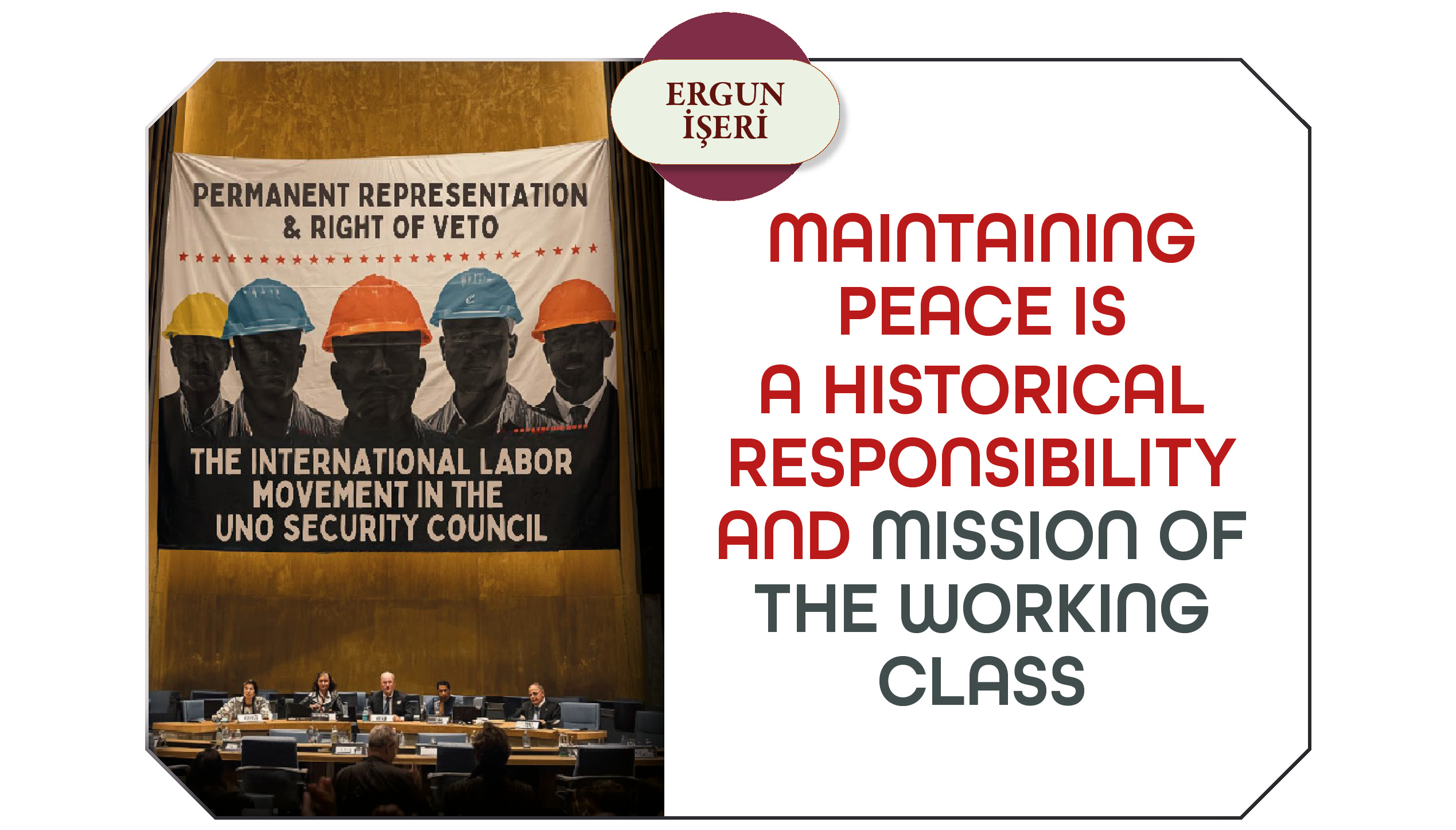
The RELOCATION of the UNO HEADQUARTERS
THE INTERNATIONAL CAMPAIGN
01 MAY 2026

„This campaign will span a fairly long political period; because the stated goal is based on the premise that the structure referred to as the “human family—a definition highlighted in the Universal Declaration of Human Rights— is, in fact, still in the process of formation.“

Dear colleagues and all progressive actors committed to building the human family,

We are all aware that the institutions of the United Nations Organisation (UN) were largely established after the second World War. The key governance apparatuses: the General Assembly and the Security Council, were physically located in New York City on the basis of an invitation from the Congress of the United States of America on the 10 December 1945. In the 79 years since then, whilst the UN has continued to advocate for peace, security, and development for all, the actions of the host country has not necessarily conformed to the resolutions of the General Assembly and has even exercised its veto power against progressive demands of the global majority of peoples and countries.

The contradictions of our contemporary conjuncture and the polycrises engulfing large contingents of humanity force the question of whether the reform and ‘democratisation’ of the UN should precede or follow escalating catastrophes? Many argue with empirical evidence that we are already inside a multiplicity of entangled catastrophes, and hence the invocation of polycrises. Can the final, albeit inadequate, erosion of international law through the collective west-sponsored genocide in Palestine, the reduction of the Minsk agreements to a war ruse, and the inhumane blockade of Cuba be cited as indisputable examples of this destruction? We think the answer is clear: Yes.

The relocation of the UN Headquarters and all of the UN agencies to another territory is not just a symbolic act, but also a tribute to the global majority, who continue to struggle heroically against unilateralism, and hegemony whilst seeking to defend their sovereignty and independence. The dawn of truly multipolar world systems would also find its reflection in this decision.

We, as a group of politically sensitised organisations and people,  have held a series of consultative meetings on the Relocation of the UNO Headquarters to ensure that arguments from a wide range of perspectives are presented. We have compiled this dossier of the perspectives put forward and now we present this dossier to you.

We list some of the key arguments included in this dossier:

  • Especially in recent years we have often heard the words “rules-based international or- der”. This would be to completely abolish laws that are already on paper and are not respected in practice. This means that the UN charter has been shelved, so a state and its partners that substitutes this new order for the UN charter cannot host the UN head- quarters and UN organs. The UN must move to innocent territories that do not spread international lawlessness (PoliTeknik).
  • …the fact that the land currently occupied by the United Nations in New York City was recognised as being property violently expropriated from the indigenous peoples of the territory… (Prof. Rasigan Maharajh, South Africa)
  • In conclusion, if the UN is serious about being the key vehicle to realise the ‘World We Want’ which would guarantee ‘A Future For All,’ it must be liberated from those forces who seek to maintain and reproduce the unequal world that we don’t want and that only seems to cater for the nearly 776 million citizens of G7 countries where average life expectancies has reached 82 years. (Prof. Rasigan Maharajh, Soutj Africa)
  • The United Nations (UN) is really being held hostage. World peace and human dignity are held hostage in New York. Currently, the UN has become an instrument of U.S. dom- ination. That is why we must rescue this international organization from its captivity. The United States has turned the United Nations into its private domain, an instrument at the service of its multinationals and power groups, and has distorted the ideals em- bodied in the founding charter: its mission to preserve peace and security through the promotion of development and human rights.(Prof. Enrique Javier Díez Gutiérrez, Spain)
  • It would not be unreasonable for the United Nations to have rotating headquarters, at least in the five continents in an agreed manner, in which there would not be a centralized headquarters in the United States with its bureaucratic apparatus, but rather inter-national representatives who would have a more accurate picture of the plurality of the world and its cultures, by passing periods of time outside the West….. More than just moving a building, we need to change certain mentalities. (Prof. Dr. Xavier Diez, Spain)
  • There needs to be concerted effort to prioritise progressive socio-economic policies within the UN whose primary objective is to fundamentally alter the colonial structure of the African economy

o These policies must be tailored to cater to the economic and social histories as well as current realities of each country on the continent

o The policies must be centred on fundamentally disentangling unequal geopoliti- cal relations between Africa and the West

Once substantial progress has been made concerning the above, it is then when progressive social stakeholders can begin having discussions on a campaign to move the headquarters of the United Nations to Africa (Kamogelo Seitireng, South African Transport and Allied Workers Union)

  • It remains to be seen whether the UN reform debate will also include consideration of shifting UN headquarters from New York to another location where the overall atmos- phere for multilateralism maybe less contemptuous. This issue is not new. It has been raised before. Such a UN location debate could evolve around three options: option i: if there is a convincing assurance by the ‘West’ that it is ready to accept democratic princi- ples in multilateralism and become a reliable UN team member, in the short run, admit- tedly most unlikely, the UN could conveniently remain based in New York. Option ii: UN HQ moves to either Geneva or Vienna, two locations where basic UN institutional infra- structure already exists. This, of course, would mean that the UN HQ remained located in the western hemisphere. Option iii: The UN finds a new location elsewhere. There are locations around the world of 8 billion+ people with hopes for a better tomorrow and an international organisation that is reliably peace-minded, with powers, big and small, working together, where international law is respected, and accountability rath er than impunity prevails, and human dignity for all and respect for nature exist.

(Hans von Sponeck, Germany)

Some arguments included in the 18th issue of PoliTeknik International:

  • It is both illogical and illegitimate for an institution that should act as a common tool for resolving conflicts and aim to ensure peaceful coexistence worldwide, such as the UN, to have its headquarters in a belligerent and pro-war country, to generate part of its income from arms sales, and to create internal and international conflicts and intensify existing conflicts for this purpose. Similarly, foreign policy operates through blackmail and pressure; this pressure is now being exerted openly and through cross-border activities.

(Denyse Hernández Villar, Cuba: https://politeknik-international.org/the-relocation-of-the-united-nations-headquarter/)

  • A Student movement that claims to fight for accessible, public, transformed education cannot remain silent while UNESCO remains headquartered in the West, shaped by the very neoliberal orthodoxy that turns education into a marketable product.

(Tarik Lalla & Demian Mukansi, South African Students Congress SASCO: https://politeknik-international.org/uno-relocation/)

  • While this is being consolidated, we, the indigenous peoples, demand that those who occupy representative positions within UN bodies act with real independence and fidelity to the founding principles of the Organization. Those who, by action or omission, support policies contrary to peace, the self-determination of peoples, or human rights must step aside to make way for ethical and structural renewal.

(Paola Álvarez Montoya, Head of Education and Culture  Abya Yala Indigenous Court of Justice•TOAJ•Peru: https://politeknik-international.org/the-relocation-of-the-united-nations-headquarters-a-view-from-indigenous/)

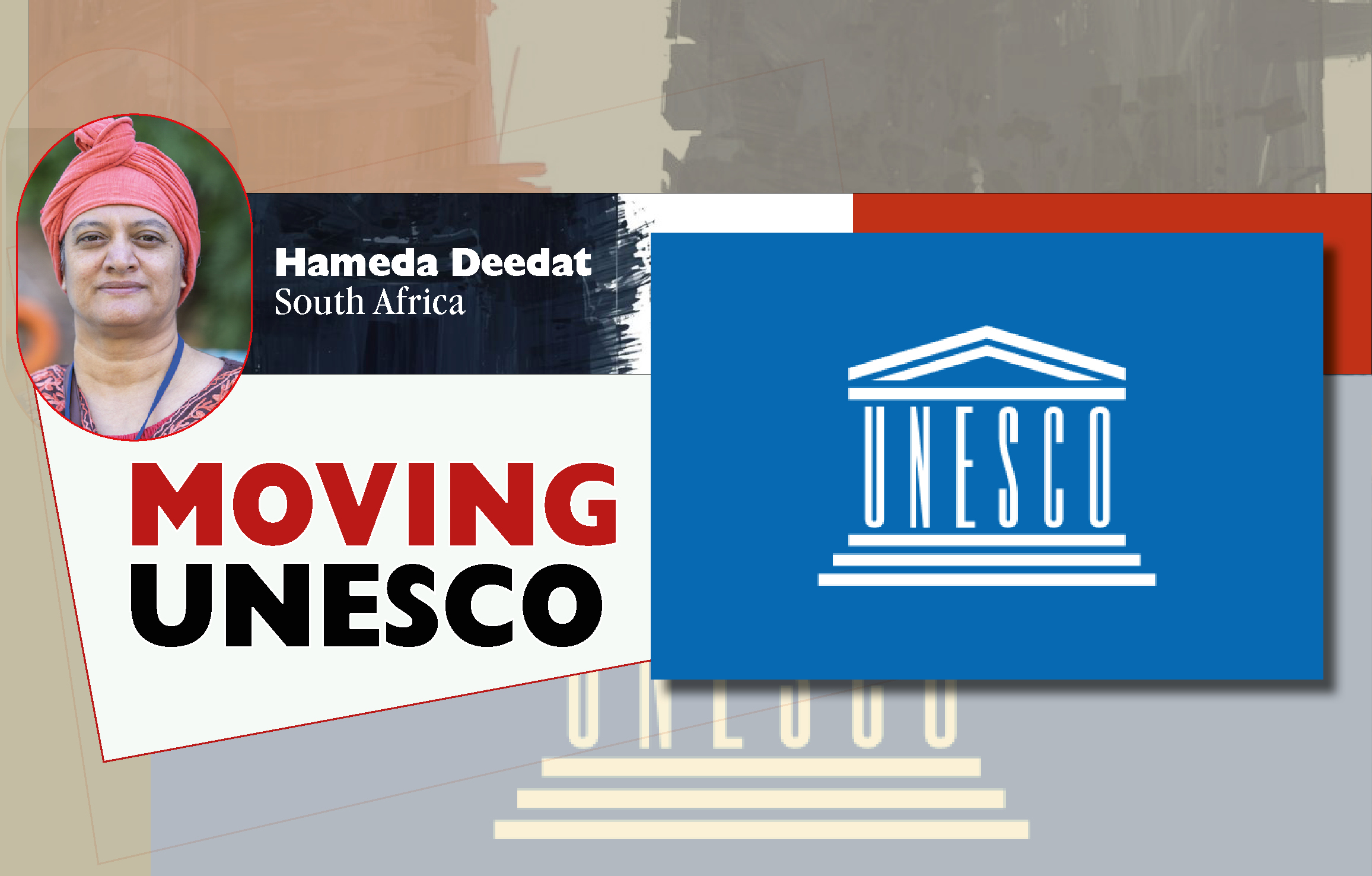
UNESCO Relocation to Havana

We are enthusiastic about the idea of moving the UNESCO headquarters to Havana as a representation of the entire Central and South American continent. The value Cuba places on education and the remarkable progress it has made in the field of education and learning make it a favoured destination for the new UNESCO headquarters.

At a time when privatisation is commodifying education, there are many democratic mass organisations, especially teachers’ unions, around the world that are trying to oppose this trend. The only country where they can receive real support is Cuba. And the move of UNESCO to Cuba can create a new impetus for these progressive movements to develop a discourse and set an agenda in the debate on the commodification of education.

On the other hand, and as a gesture of solidarity with Cuba, the reinstatement of UNESCO in Havana, representing the global majority, could represent a diplomatic victory and start the process of releasing Cuba from the illegitimate blockade by the USA, which will begin with the construction of a new headquarters. Visits to UNESCO, as an important address for educational policies, and the appointment of representatives, could give Havana the status of ‘THE CAPITAL OF EDUCATION’ for a decade, a status that is either formalised or accepted wholeheartedly.

In addition to the annual vote in the UN General Assembly to lift the blockade against Cuba, could there be a vote to move UNESCO to Havana? Could consultations on this idea be initiated with the BRICS countries, as well as with leading countries of Cuban solidarity, such as South Africa? Could states such as Brazil, Russia, India, China, and South Africa set up a fund to finance a new UNESCO centre, to which other states could contribute?

These are just a few of the first questions that come to mind, and if the idea of moving UNESCO to Havana does indeed generate significant momentum, then there is no doubt that a myriad of questions and ideas arising from the spirit of solidarity will follow. The arguments listed here can be multiplied and developed in a more detailed discussion.

Sincerely regards,

* The campaign file is available via following link: 

https://politeknik-international.org/un-relocation/#flipbook-df_11425/3/

related article