Summary
The purpose of this article is to:
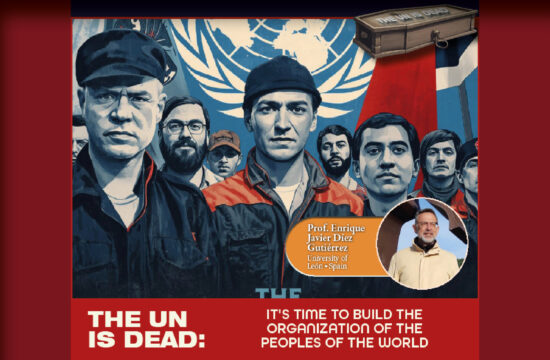
• Express the view that the prevention of wars cannot be left solely in the hands of current international mechanisms, in which only states, and in particular the capitalist and imperialist powers, are represented;
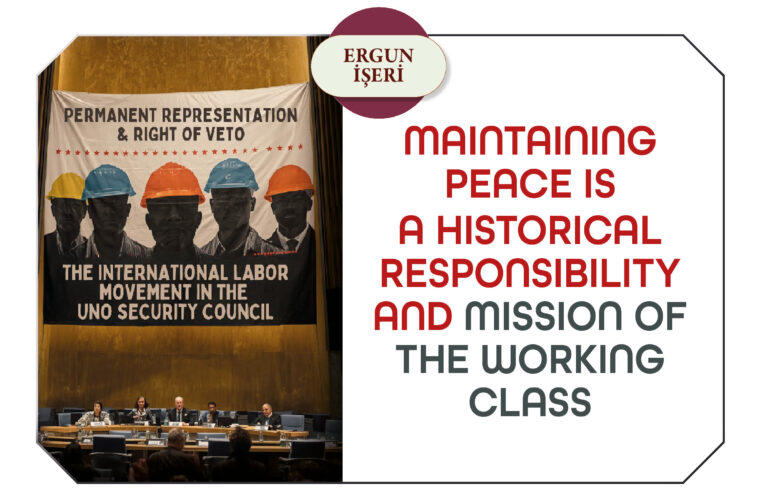
• and argue that the working class, which bears the heaviest social cost of war, must have the right to institutional and binding representation on the United Nations Security Council.
Wars and the Position of the Ruling Classes
Wars are among the most devastating events in human history. In nearly every period of history for which records and archaeological findings exist, there have been conflicts and wars among human beings.
Since capitalismbecame a dominant force, large and small scale wars have become increasingly widespread, and in the era of imperialism, two world wars have taken place.
The severe destruction caused by World War I led countries to seek a lasting world peace, and with the Treaty of Paris, signed in 1919, the process that led to the creation of the League of Nations began.
Neither the League of Nations, founded in 1920, nor the Kellogg-Bri- and Pact, signed in 1928, succeeded in preventing the new wars launched in the following years in defense of capitalist interests.
Following World War II, and drawing on past experiences, the United Nations was founded in 1945. The United Nations was granted the authority to adopt binding resolutions against war and to take action in the event of conflict. In this context, the United Nations Security Council was established.
While this structure succeeded in preventing another war on the scale of the two previous world wars, it has been unable to prevent conflicts between countries and regions.
The post-World War II period gave rise to a bipolar world, divided between imperialist/capitalist and socialist countries. This period was initially called the “Cold War,” although, in reality, armed conflicts continued almost everywhere.
This period also gave rise to a change in the functioning of imperialism. The classical concept of colonization and direct occupation has been replaced by new colonial relations in which sovereignty is exercised through local powers. This change has also transformed the nature of conflicts and wars:
• With the aim of controlling local authorities, imperialist countries have directly or indirectly supported coups d’état and civil wars.
• Wars, as with capitalism’s new model of production, are no longer largscale but unfold in small fragments and spread throughout the world.
• The system of “proxy wars” to establish or maintain regional sovereignty has become widespread.
Currently, the most typical example of a proxy war is the war in Ukraine. Each proxy war is simultaneously used as a testing and development ground for weapons by imperialist countries and the military-industrial complex (the capitalists).
The Working Class’s Call: The Struggle Against War
Capitalism and imperialism, by their very nature, tend to expand their sphere of domination through force-based methods in order to reap greater profits.
In an article published in 1920, Lenin made the following description of World War I:1
„…The 1914–1918 war was, for both sides, an imperialist war (that is, a war of conquest, plunder, and pillage), a war waged with the aim of dividing up the world and dividing and redividing the colonies and the “spheres of influence” of finance capital…”
This tendency inherent in capitalism and, as its higher stage, imperialism, has led to the deaths of millions of people, injured just as many, inflicted irreparable physical and/or psychological harm on them, and resulted in the destruction of their homes and living spaces.
The facts have made it clear that, whether countries are defeated or consider themselves victorious, the only winners of wars have always been the capitalists.
A study by Andreas Ferrara found that more than 75% of the American soldiers who fought in World War II were working-class, and that the vast majority of the soldiers who lost their lives also came from the working
class.2
The most disadvantaged sectors of the population, especially the working class, became impoverished on the one hand, but above all, they continued to be the ones who paid the highest price in terms of human lives.
This general rule, which applied yesterday, continues to apply in almost every contemporary war.
For this reason, the working class has attached particular importance to taking a clear stance against war since the beginning of its efforts to organize on a global scale.
Karl Marx, in a document he wrote in 1864 with the aim of founding the “International Workingmen’s Association,” also known as the First International, defended the following ideas:3
“… it has taught the working classes to master the secrets of international politics, to observe the diplomatic maneuvers of their own governments, and to oppose them with all their might when necessary; and when they cannot prevent them, to unite in simultaneous acts of condemnation and to defend the simple laws of morality and justice, which must govern both international relations and relations among individuals.
Fighting for a foreign policy of this kind is part of the broader struggle for the liberation of the working classes.”
With this approach, Marx defined the working class’s involvement in the realm of international politics, which includes wars, as an important task and a field of struggle.
This lesson, born out of the defeat of the revolutionary wave of 1848 in Europe, established a general framework for the international working-class movement’s stance on international politics and war.
The question of what the working class’s stance toward wars should be also took center stage during the history of the Second International, even sparking intense debates in the face of the imminent and probable threat of war. The resolution adopted at the 1891 Brussels Congress stated that any effort to eradicate militarism would be utopian and futile if the economic roots of this evil were ignored.4
At the Stuttgart Congress, held in 1907, the slogan “War Against War,” coined by Jean Jaurès, was defended in the years that followed by leaders of the left, notably Lenin and Luxemburg.
The Second International’s failure to develop policies to prevent war and the German Social Democratic Party’s (SPD) support for the war budget, under the pretext of defending the homeland against Tsarist Russia, caused a major rupture in the internationalist line that the working class had sought to follow since the time of Karl Marx. This rupture paved the way, on the one hand, for the political oppression of the working class in Europe and, on the other, for the masses to lose their lives on the battlefields.
The Cold War that emerged after World War II and the covert and overt wars of that period have als negatively affected the positions adopted by the working class’s political and/or labor organizations.
The efforts of imperialist states to keep societies under their domination and govern them have made the working class one of the key groups that must be kept under control. The struggle against imperialism and the governments of subordinate countries has, at the same time, rendered necessary the struggle against the institutions and organizations under their control or influence.
The intervention of the working class on the
international stage and the struggle against war.
The global mechanisms that have been created are ultimately (assuming that exceptions do not undermine the rule) insufficient to prevent the destructive consequences of imperialist policies.
Among the mechanisms of global governance, the United Nations occupies a special place. In its founding document, known as the United Nations Charter, the organization’s primary objective is “to maintain international peace and security” (Chapter 1, Article 1).5
Almost all of the permanent and non-permanent members of the United Nations Security Council, which was created to prevent wars, are capitalist countries. These countries always prioritize their own capitalist and imperialist interests and gains.
The evident influence of the military-industrial complex on the governments of these countries shapes the Security Council’s decisions on numerous issues.
The attacks on Iran and Gaza in recent years, the war between Ukraine and Russia, the civil wars in Sudan and Myanmar, as well as the threats and attempts at intervention against Venezuela, make it clear that environments of conflict persist. Some of these examples are crises in which the permanent members of the UN Security Council are directly involved or exert decisive political and military influence.
According to the United Nations Charter, 5 of the 15 members of the Security Council are permanent members.6 “The permanent members, which are the Republic of China, France, the Union of Soviet Socialist Republics, the United Kingdom of Great Britain and Northern Ireland, and the United States of America, have the right to veto the decisions.
In the past, the Security Council brought together representatives of the bipolar world (capitalist and socialist) of the “Cold War” era. Today, however (if we accept that the People’s Republic of China is an exception), it is clear that it represents the imperialist world.
The 10 non-permanent members of the Council are elected to a two-year term. The Council can adopt resolutions with the affirmative vote of at least 9 of its 15 members. The resolutions adopted are, in theory, binding on all countries, but this binding nature holds no weight for the imperialist states or for the countries they support.
The current structure is based almost entirely on states that are under the influence and direction of the arms monopolies (the capitalists).
The capitalist classes, thanks to their power, always have the final say and the ability to make decisions on international policy, particularly with regard to wars. In contrast, the working class can only participate in these processes under very limited conditions. International campaigns and actions are among these tools for intervention.
However, this is an extremely limited arena of struggle with a reduced impact.
To overcome this limitation, it is necessary to pave the way for the working class to play a greater role in international relations and in policies aimed at preventing war.
Although its influence is limited, the United Nations Security Council could create a space for the working class to play such a role.
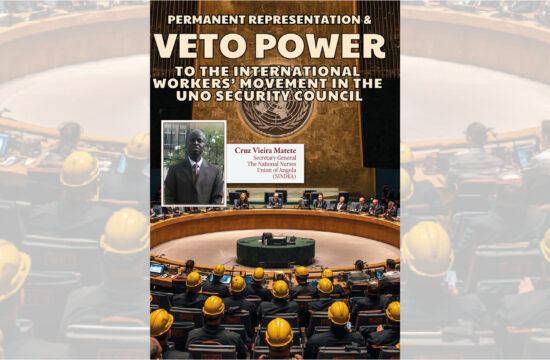
In this regard, it is important that the Security Council include not only representatives of governments led or influenced by the war industries, but also representatives of the working class, which can be considered the primary victims of war.
It is clear that this will not create a balance. Nevertheless, the mere fact that there is an opportunity to express views and that the right to intervene is established can be considered a step forward.
War is a problem for humanity, and its solution is an essential task for humanity. The main advocate and representative of this task is, without a doubt, the working class.
For this reason, the representation of the working class on the United Nations Security Council, and even its right to veto, is both useful and necessary.
Precisely on this point, the question of how the global working class will be represented is a topic that deserves a separate debate.
Under current conditions, the organization with the broadest network of affiliates is the International Trade Union Confederation (ITUC). When analyzing the history of the ITUC, which in recent years has expressed its opposition to wars, it is important to note that, in the bipolar world it was positioned on the side of the capitalist world.
- V. İ. Lenin (2009) – Imperialism: The Highest
Stage of Capitalism – Sol Yayınları, Ankara, p.10 - Andreas Ferrara (2022) – World War II and Black Economic Progress – Journal of Labor Economics, volume 40 Number 4. https://drive.google.com/file/d/1i7ilQ5Ep2LfcUc0-BZbCygz1Tuh7B6B9/view
- Marx's Inaugural Speech ( “Call for the Founding of the International Workingmen's Association”) Halil Çelik (2008) – International Workingmen's Association (First International) – Prinko Yayıncılık, Istanbul, p. 218
- Patricia van der Esch (2020) - İkinci Enternasyonal 1889-1923 - Yordam Kitap, Istanbul, p. 125
- https://www.un.org/en/about-us/un-char-ter/full-text
- https://www.un.org/en/about-us/un-char-ter/full-text