Enrique-Javier Díez-Gutiérrez.
Professor at the University of León and author of „Soberanía Digital Educativa“ (2026), „Pedagogía Antifascista“ (2025), and „Pedagogía del Decrecimiento“ (2024).
Gaza has marked a turning point in the history of the international order emerged after World War II. As tens of thousands of people have been killed by the zionist entity, a large part of the population has been displaced, and civilian infrastructure has been devastated, the international community has once again witnessed the United Nations’ inability to enforce the principles set forth in its own Charter. Successive vetoes in the Security Council have prevented effective responses, while the General Assembly has been able only to adopt resolutions that are not binding.
When an organization established to preserve peace is unable to prevent a genocide of this magnitude, the question is no longer merely what has gone wrong, but whether the institutional model itself has exhausted its historical legitimacy. Although it may be hard to accept, a growing number of people believe that the UN, as it currently exists, no longer represents the will of the world’s peoples but has instead become a system conditioned by the interests of the major powers and by the growing dynamics of transnational economic power.
If we want a truly people-centered institution, reforming the UN is not enough: we need to envision and build a genuine Organization of the Peoples of the World, based on equality, international democracy, and the primacy of human rights over any geopolitical or economic interest.
The name Organization of the United Nations contains an increasingly evident paradox. The institution was established in 1945 as an organization of sovereign states with the purpose of preventing further world wars, promoting international cooperation, and ensuring peace, human rights, and development. Nevertheless, not all of its members constitute «nations» in the historical and political sense of the term, nor does the organization itself respond exclusively to the will of its member states.
This contradiction encourages us to rethink a fundamental question: What do we mean by nation, and what does it mean to have completed a process of nation-building?
The national building (nation-building) is the historical process through which a political community develops common institutions, a shared sense of citizenship, democratic mechanisms of legitimacy, and an effective capacity to exercise sovereignty over its territory. It is not just a matter of having recognized borders or holding a seat at the UN. A state may exist legally without having fully consolidated a politically cohesive nation.
Historical experience shows that nation-building has never been a linear process. It has depended on factors including independence from foreign powers, institutional capacity, social integration, the existence of a common political vision, and effective control over strategic economic decisions.
From this perspective, many UN member states still experience important limitations. Some are involved in internal territorial conflicts or prolonged civil wars; others rely heavily on foreign powers for their security, funding, or political stability; some suffer partial occupations of their territory; others are subject to strict conditions imposed by international financial institutions or deeply asymmetrical economic relationships.
Therefore, there is no simple division between «complete nations» and «incomplete nations». Instead, we find different degrees of political autonomy, institutional cohesion, and sovereign capacity.
Globalization itself has profoundly altered the classical meaning of sovereignty. Nowadays, fundamental decisions regarding investment, debt, trade, technology, energy, and communications often go beyond national borders. Global production chains, financial markets, and large multinational corporations exercise an influence that shapes the public policies of numerous governments.
Various studies on global governance have demonstrated how private actors—multinational corporations, investment funds, philanthropic foundations, major technology platforms, and technofascist oligarchs—, together with states, have taken on an increasingly prominent role in shaping international policy through funding, technical advice, or institutional partnerships. This evolution has prompted extensive academic debate on the mechanisms of transparency, accountability, and democratic legitimacy in multilateral institutions.
In this context, several analysts argue that the UN has been partially moving away from the spirit in which it was founded. The unequal distribution of power within the Security Council, the veto power held by the five permanent members, and the unbalanced influence that major powers exert over various specialized agencies have for decades sparked proposals for far-reaching reform of the organization.
The issue is not just about physically moving the headquarters from New York to another part of the world, but about revising the very model of international governance. Should it continue to be an organization built exclusively around states? Or should it incorporate new forms of representation for social actors with global relevance?
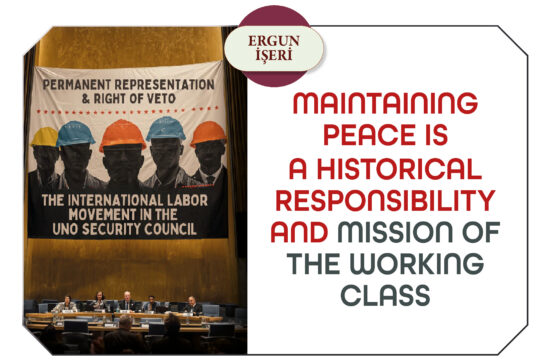
Among the proposals that periodically appears in various intellectual circles is the possibility of expanding international representation by incorporating mechanisms for the participation of international labor unions, social movements, indigenous peoples, scientific communities, or other organized expressions of civil society. Its advocates argue that many of today’s major challenges —climate change, global inequality, digitalization, artificial intelligence, and migration— cannot be addressed solely through negotiations between governments.
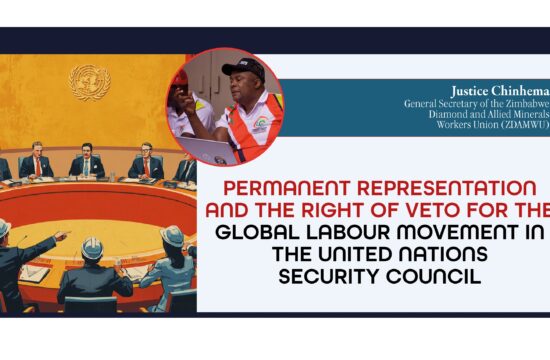
From this perspective, the debate over the Global Labor Movement also arises. Supporters of broader participation argue that workers represent a fundamental dimension of global society and that international labor organizations should provide a distinct voice on issues related to labor rights, inequality, and sustainable development. Their opponents, on the other hand, believe that the UN’s legitimacy rests precisely on state representation and that altering that principle would radically change the nature of the international system.
This discussion brings us back to the very name of the organization. Perhaps the concept of the «United Nations» adequately described the world that emerged after World War II, but it is less precise when it comes to explaining the complex reality of the 21st century.
Nowadays, fully consolidated states coexist with others whose sovereignty remains limited; public actors coexist with massive private corporations capable of influencing international policies; and democratic institutions coexist with governance structures where citizen representation is indirect or insufficient.
Rather than asking which states have completed their nation-building, perhaps we should ask an even deeper question: What institutional architecture does an increasingly interdependent humanity need to address problems that can no longer be resolved solely by nation-states?
Rethinking the UN means, ultimately, initiating a debate on the democratization of global governance. This implies a discussion about the distribution of power, the representation of global citizens, the influence of transnational economic actors, and the reforms needed to ensure that international institutions respond with greater effectiveness, legitimacy, and transparency to the challenges of the 21st century. It may also be time to ask whether the name «United Nations» still accurately describes the organization the world needs.
That is why this moment is crucial. There are moments in history when an institution definitively reveals its true nature. Gaza represents one of those moments. The United Nations’ failure to stop a mass genocide broadcast live by its own victims and the massive destruction of an entire people and their way of life, as well as its inability to enforce international law and ensure the effective protection of human rights, has exposed a crisis far deeper than the failure of a single organization: it has revealed the exhaustion of the international order established after World War II. When the veto power of a few major powers can block the enforcement of international law even in the face of the most serious violations of humanitarian law, the problem no longer lies solely in the political decisions of certain governments, but in the very institutional architecture of the UN.
The question, therefore, is not just why the UN has failed in Palestine, but whether an organization designed to represent states is still capable of representing the interests of humanity. Seventy-five years after its creation, the world is no longer governed exclusively by sovereign states. Large transnational corporations, financial funds, digital platforms, and other private economic powers increasingly shape the decisions of governments and international organizations. People’s sovereignty is weakening, while a form of global governance is strengthening in which economic, technological, and media power wields far greater influence than that of the majority of peoples.
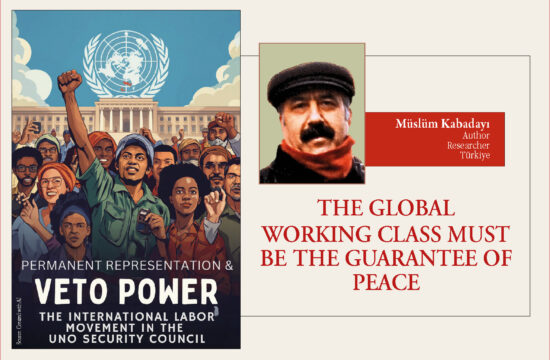
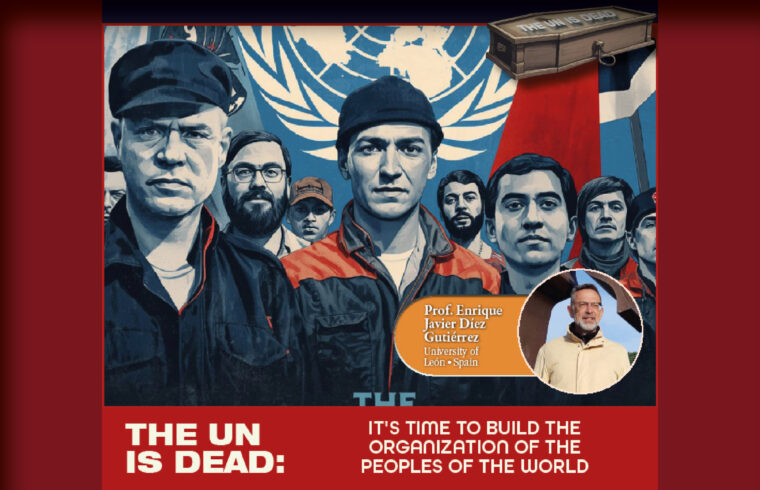
Therefore, perhaps the time has come to acknowledge an uncomfortable reality: the UN is not merely undergoing an operational crisis, but a crisis of legitimacy. Its very name —United Nations— refers to a world that no longer exists. Not all member states are fully sovereign nations, nor do major international decisions reflect solely the will of those nations. Since the objective is still to build an international order based on peace, justice, and human rights, the issue is no longer just reforming the UN, but opening the debate on a new global democratic institution: a true Organization of the Peoples of the World, where the leading role is not played by the power of the strongest states or the influence of major economic interests, but by the effective representation of the peoples and the global working class.