Ishani PREMASIRI
Lecturer, SLIATE, Member of the Union
of Sri Lanka Teachers Solidarity (USLTS)
The United Nations (UN) was established in 1945 with the primary objective of maintaining international peace and security while promoting cooperation among nations. At the center of this responsibility is the United Nations Security Council (UNSC), which possesses the authority to adopt binding resolutions, authorize peacekeeping operations, impose sanctions, and approve the use of force when necessary. Unlike other UN organs, the Security Council is structured around unequal representation. Five countries—the United States, the United Kingdom, France, Russia, and China—hold permanent seats and enjoy the exclusive right to veto any substantive resolution. This institutional arrangement reflected the geopolitical realities that emerged after the Second World War and was intended to ensure that the major powers remained committed to the United Nations. However, the global political and economic landscape has changed significantly since 1945, raising important questions about the continued legitimacy of permanent membership and the veto system.
The international workers‘ movement has long advocated principles of equality, democracy, social justice, and international solidarity. From this perspective, governance structures should represent the collective interests of people rather than the strategic interests of a small number of powerful states. Consequently, many labour organizations and progressive political movements have criticized the concentration of authority within the Security Council, arguing that it contradicts democratic ideals and weakens the credibility of the United Nations. This essay critically examines the system of permanent representation and veto power in the Security Council and evaluates its implications from the perspective of the international workers‘ movement.
Permanent membership in the Security Council was established during the negotiations that led to the creation of the United Nations. The victorious Allied powers insisted on retaining a privileged position because they believed that maintaining global peace required the cooperation of the world’s strongest military and political powers. Granting these states permanent representation was therefore considered a practical compromise to secure their participation in the new international organization.
Supporters of permanent representation argue that the system has contributed to international stability by ensuring that the major powers remain engaged in multilateral diplomacy. Since these countries possess considerable military, economic, and political influence, their involvement is often essential for implementing Security Council decisions. Permanent membership can also provide continuity in decision-making, allowing experienced states to respond quickly to international crises and coordinate collective security measures.
Nevertheless, the system has attracted increasing criticism. One major concern is that the composition of the permanent membership reflects the distribution of power in 1945 rather than the realities of the twenty-first century. Regions such as Africa, Latin America, and much of the developing world lack permanent representation despite their growing political and economic significance. Countries such as India, Brazil, Germany, Japan, Nigeria, and South Africa have frequently been identified as potential candidates for permanent membership because of their demographic, economic, or regional importance.
The absence of broader representation undermines the democratic legitimacy of the Security Council. Many member states argue that decisions affecting international peace and security should not be dominated by only five countries. As a result, critics contend that the Council no longer adequately reflects the diversity of the international community.
The veto power is perhaps the most controversial feature of the Security Council. Article 27 of the UN Charter effectively allows any permanent member to block the adoption of a substantive resolution, regardless of the level of international support it receives. This means that even if fourteen of the fifteen members vote in favour of a proposal, a single veto from one permanent member prevents its adoption.
Supporters argue that the veto serves as a safeguard against direct confrontation among major powers. Without this mechanism, powerful states might simply ignore Security Council decisions that threaten their national interests, thereby weakening the effectiveness of the United Nations. The veto also encourages negotiation and compromise among permanent members before decisions are finalized.
Despite these arguments, the veto has frequently prevented timely international action during humanitarian crises and armed conflicts. Throughout the history of the United Nations, permanent members have used the veto to protect political allies, preserve strategic interests, or prevent criticism of their own actions. Such use of the veto has often resulted in prolonged conflicts, delayed humanitarian assistance, and diminished confidence in the Security Council’s ability to fulfil its primary responsibility of maintaining international peace and security.
Critics therefore argue that the veto transforms international decision-making from a system based on collective responsibility into one heavily influenced by national interests. Rather than promoting equality among states, it institutionalizes unequal political authority and allows a small group of countries to determine the outcome of issues that affect the entire international community.
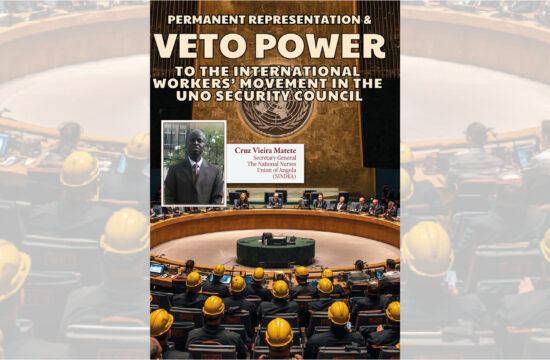
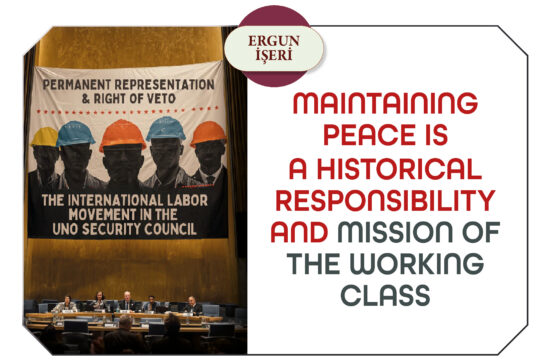
The international workers‘ movement has traditionally emphasized democracy, equality, peace, and international solidarity. Labour organizations generally support multilateral cooperation but oppose institutional arrangements that concentrate political power in the hands of a privileged minority. From this perspective, the permanent membership and veto system conflict with the principle that all nations should participate equally in decisions affecting global peace and human welfare.
Workers‘ organizations have historically argued that international institutions should prioritize human security, social development, labour rights, poverty reduction, and economic justice rather than geopolitical competition. The frequent use of the veto to protect national strategic interests is therefore viewed as inconsistent with these objectives. Many labour movements believe that military conflicts often impose the greatest burden on ordinary workers through displacement, unemployment, inflation, and declining living standards, while political elites remain relatively insulated from these consequences.
Consequently, many organizations associated with the international workers‘ movement have supported proposals for Security Council reform. These proposals include expanding permanent and non-permanent membership to improve regional representation, restricting the use of the veto in cases involving genocide, war crimes, crimes against humanity, and large-scale humanitarian emergencies, or gradually eliminating the veto altogether. Such reforms are seen as steps towards a more democratic and accountable system of global governance.
The system of permanent representation and veto power has played an important role in maintaining the participation of major powers within the United Nations since its establishment in 1945. Its supporters argue that it contributes to international stability and prevents direct confrontation among the world’s most powerful states. However, the concentration of authority in the hands of five permanent members increasingly appears inconsistent with contemporary principles of democracy, equality, and fair representation.
From the perspective of the international workers‘ movement, the current structure of the Security Council limits the development of a more inclusive and equitable system of global governance. The unequal distribution of political power and the repeated use of the veto to protect national interests undermine confidence in the legitimacy and effectiveness of the United Nations. Although achieving comprehensive reform remains politically difficult because amendments require the consent of the permanent members themselves, growing international support for reform demonstrates increasing recognition that the Security Council should better reflect the realities of the modern world. A more representative Council with greater accountability and reduced reliance on the veto would strengthen both the legitimacy of the United Nations and its ability to promote international peace, justice, and cooperation.