Cruz Vieira Matete
Secretary General
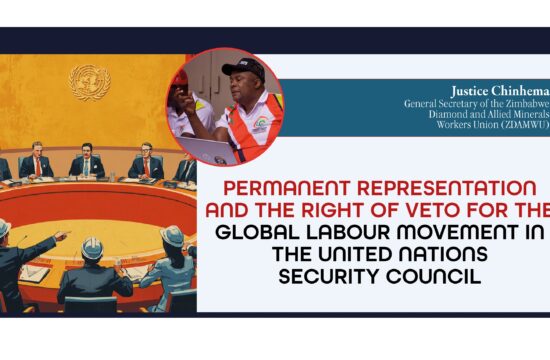
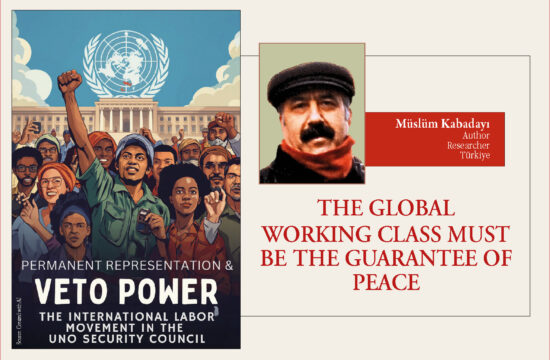
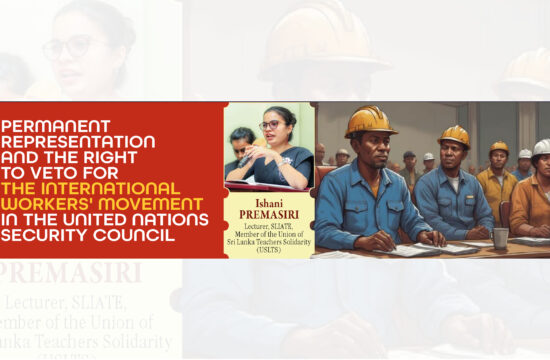
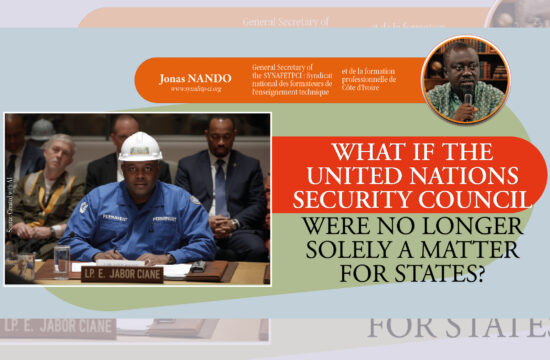
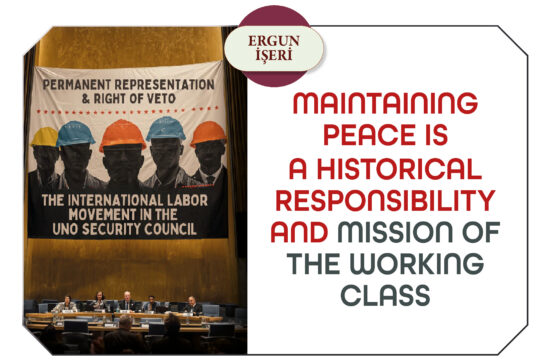
The National Nurses Union of Angola (SINDEA) celebrates the proposal to include a representative of the global working class within the United Nations Security Council and grant this representative veto power.
This represents the recognition of the achievements of the world’s workers in the development and growth of nations, as well as the important role played by the working class on a global scale.
In our opinion, what would the world be like without the working class, represented by labor unions, which play a leading role in defending labor rights?
The proposal for workers around the world to be represented by a member in the United Nations Security Council, with veto power, is an innovative idea that seeks to strengthen social justice and give the working class a greater voice in global decision-making.
Even though this proposal is not currently part of the United Nations structure, it does present potential advantages and challenges.
Such representation would be important because it could serve to protect the rights of workers.
A global representative of workers could advocate for better working conditions, living wages, workplace safety, and social protection in every region of the world.
Better balance in international decision-making;
Nowadays, the Security Council is composed of states.
A representative of workers would bring the perspective of the people who produce the world’s wealth, which would make decisions more inclusive
Promotion of social peace.
Most of the world’s conflicts are rooted in poverty, inequality, unemployment, and labor exploitation.
The participation of workers could help establish policies that address these root causes.
Strengthening social justice
Decisions regarding sanctions, national reconstruction, and peacekeeping missions could more directly consider the impact on workers and their families.
Veto power—advantages and risks:
A representative with veto power could:
Prevent decisions that would seriously undermine labor rights;
Demand that social issues be taken into account before international measures are approved.
Nevertheless, there would also be challenges:
the veto could make decision-making even more difficult, since five permanent members already hold that power;
it would be necessary to determine who would legitimately represent all workers of the world, given the differences among countries, sectors, and labor unions.
Current situation:
Currently, only five countries have veto power on the Security Council:
China; United States; France; United Kingdom; Russia.
There is no permanent representation for workers, labor unions, or civil society in this body.
Conclusion:
Including a global representative of workers in the UN Security Council could strengthen the defense of human rights, social justice, and peace by giving a voice to a significant portion of the world’s population.
However, granting such a representative the right of veto would require a profound reform of the United Nations Charter and a broad international consensus, as it would significantly alter the balance of power within the Security Council.